
Ceilings in Harrisburg
Ceilings hung, repaired and taken back to flat
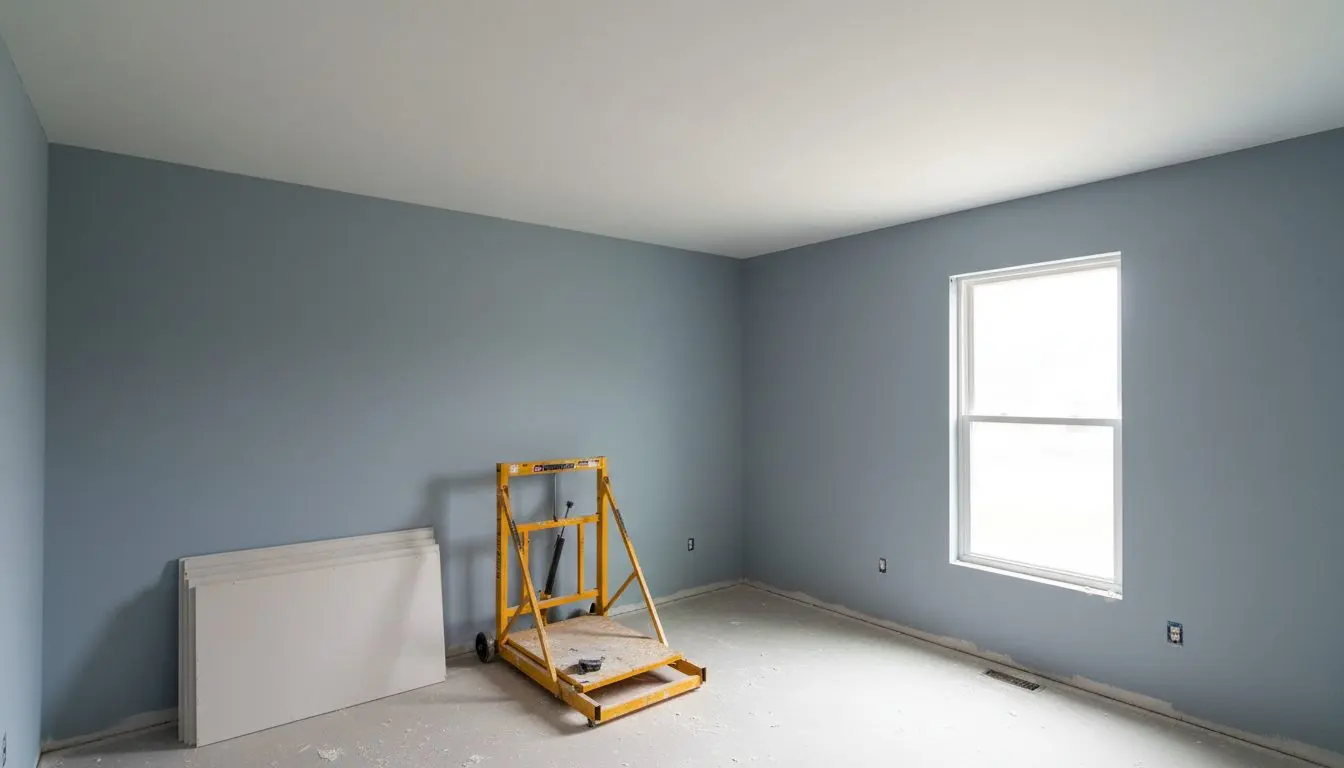
Five-eighths board lifted and screwed across the joists, three coats worked looking upward, and the whole lid checked under a light before anybody calls it finished.
The work overhead, from popcorn to a bowing lath lid
You end up with a ceiling that reads flat from every corner of the room, with nothing sagging, cracking or staining above you.
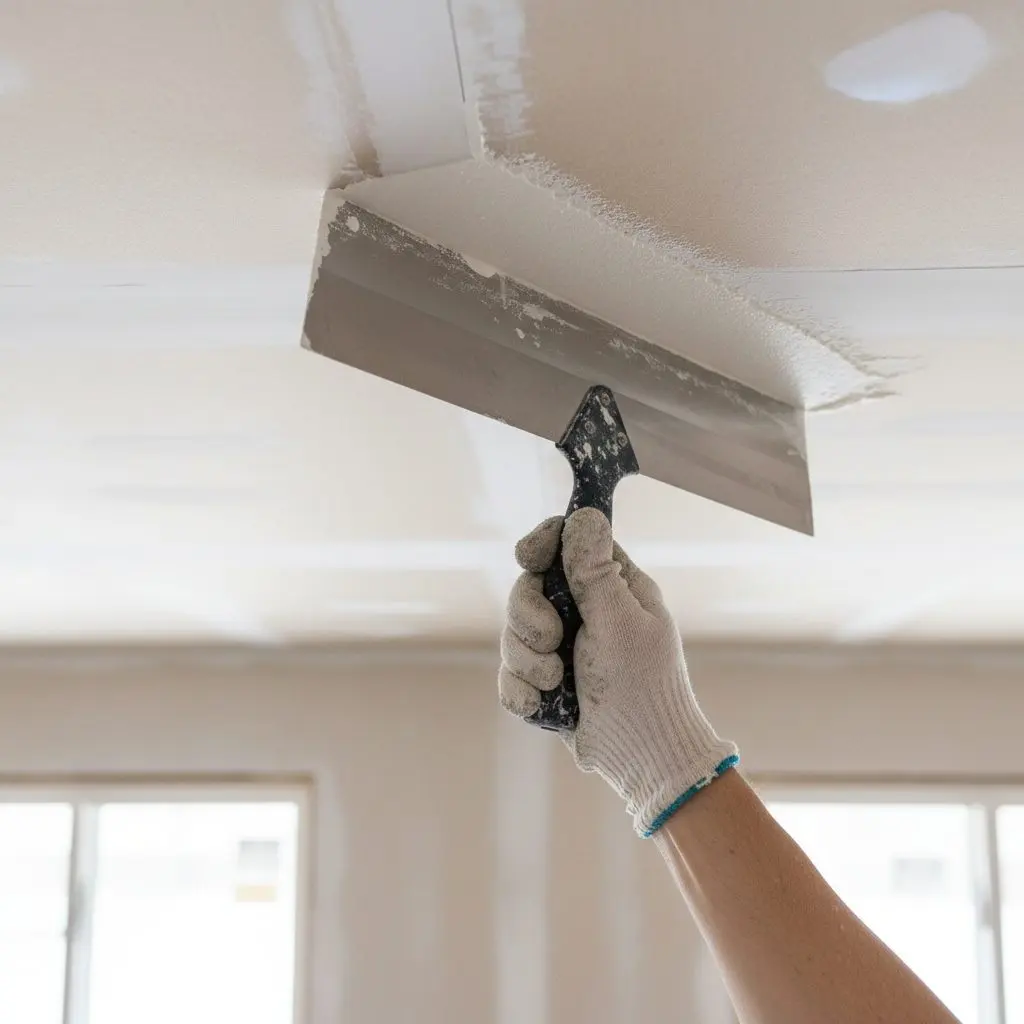
Ceilings are the work overhead. Popcorn and sprayed texture off, plaster lids that have let go of the lath, new ceilings in additions and attic rooms, and soffits boxed in around ductwork. If the walls are coming out as well, that is drywall installation. If the ceiling is stained and something above it is still wet, start at water damage repair.
Around fifty ceilings a year, split between popcorn coming off post-war houses and lath-and-plaster lids coming down in the rowhouses in town.
The usual calls are popcorn or sprayed texture coming off, a plaster ceiling that has started to bow away from the lath, a new lid in an addition, a basement or an attic room, cracks running along the wall line, and soffits built around ductwork and beams. Ceilings take five-eighths board fixed at seven inches on the joists and run across them rather than with them, which is what stops a lid dropping between the framing and putting a hairline along every joint in its second winter.
A homeowner in Linglestown who wants three bedrooms of popcorn gone before new carpet goes down, and a landlord in Allison Hill with a front room lid that has begun to bow.
Ask for a free ceiling check at (717) 555-0164 and somebody will sound the lid while they are there. You will stop steering people out of that room and start forgetting to look up!
Scraping, hanging, boxing in and clearing up
Everything overhead, from the lid coming down to a primed ceiling.
- Popcorn and sprayed texture scraped back
- Sagging lath ceilings taken down and rehung
- Five-eighths board lifted, screwed and taped
- New ceilings in additions, basements and attics
- Soffits and bulkheads boxed around ductwork
- Cracks along the wall line cut out and taped
- Floors sheeted and the room vacuumed after
Save the old plaster ceiling, or take it down and board
A ceiling that has cracked is not automatically a ceiling that has to come down.
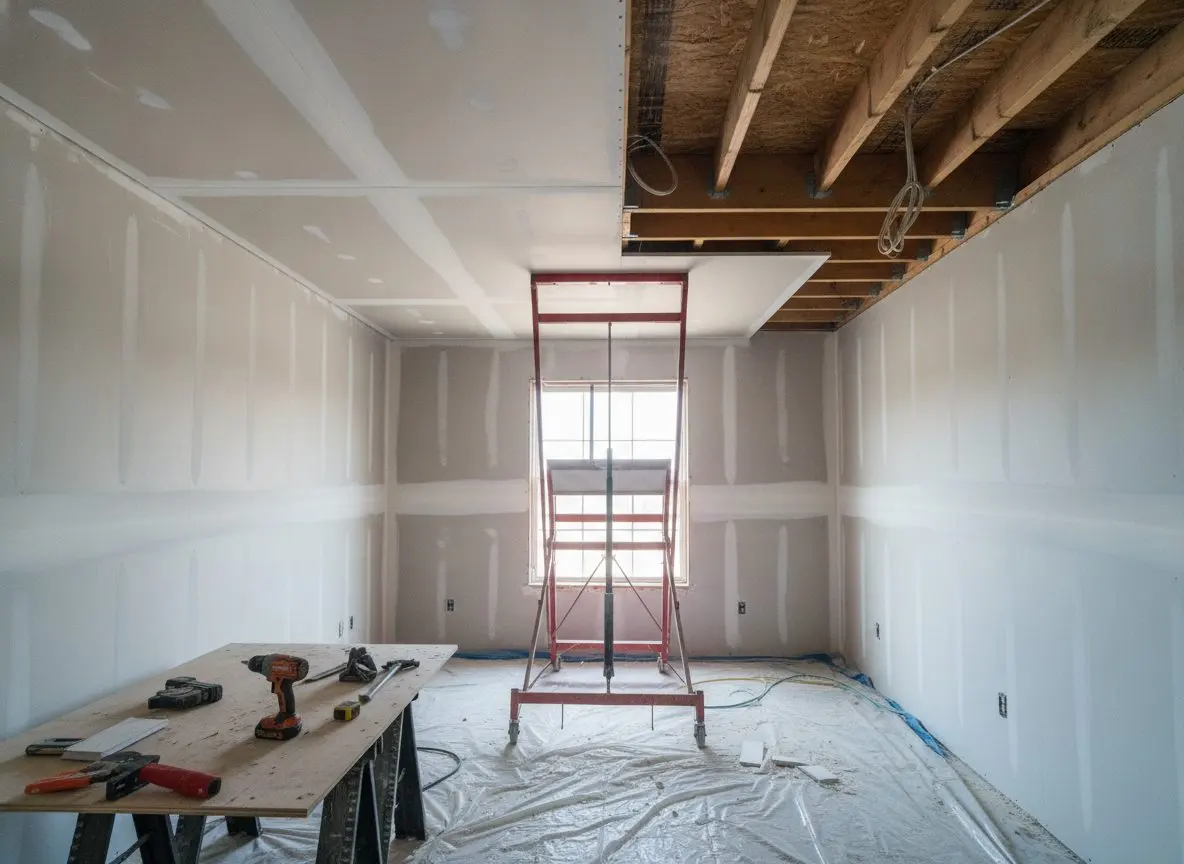
Saving it works when the plaster is still keyed to the lath across most of the area, when the sag is under an inch, and when nothing above it has been wet. Plaster washers go through into the joists on a grid, the loose field is drawn back up, and the whole lid is skimmed over.
It comes down when a knuckle sounds hollow over a wide area, when the keys have snapped and the paint is holding the panel up, or when water has been through from a roof or a bathroom above. A ceiling that has let go comes away in sheets rather than crumbs, and screwing washers into it only decides where it tears.
We sound the ceiling on the visit and say which it is, including when washers and a skim will do and you keep the original lid. It takes ten minutes with a knuckle and a flashlight. Where half a ceiling is sound and one end has gone, the quote is written that way rather than pricing the room as one job.
What keeps a lid flat through its second winter
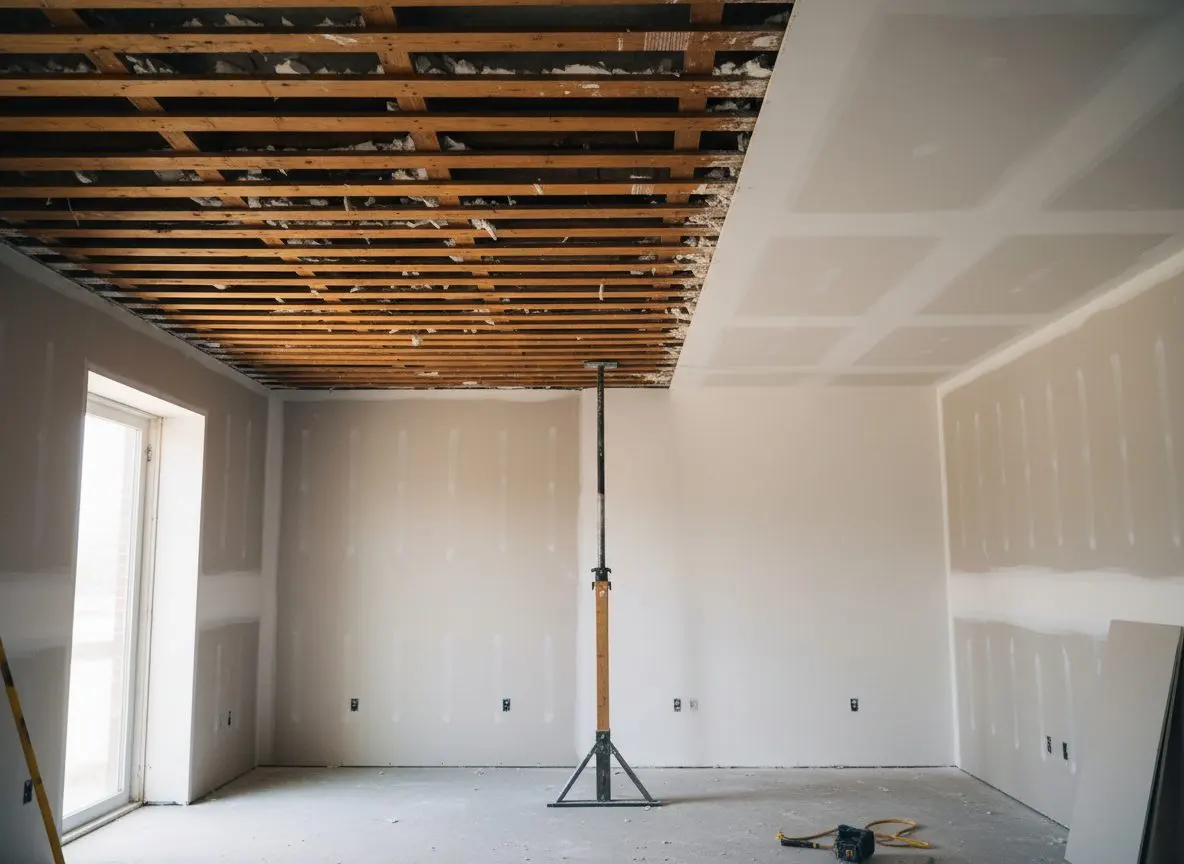
Five-eighths board across the joists, screwed at seven inches, paper-taped at every wall angle.
Ceilings take five-eighths board, run across the joists rather than parallel with them, so each sheet ties several together and butt joints land on solid framing.
Screws are set at seven inches through the field of a ceiling, closer than the twelve used on a wall, because gravity works on a lid every day. Where the framing is at twenty-four-inch centers and half-inch is specified, it is sag-resistant board rather than ordinary.
Joists are strapped or furred into one plane first, since a bowed joist reads as a shadow across a finished ceiling and no amount of compound takes it out. The wall angle is paper-taped, never mesh, and finishing follows ASTM C840 with the level named per room.
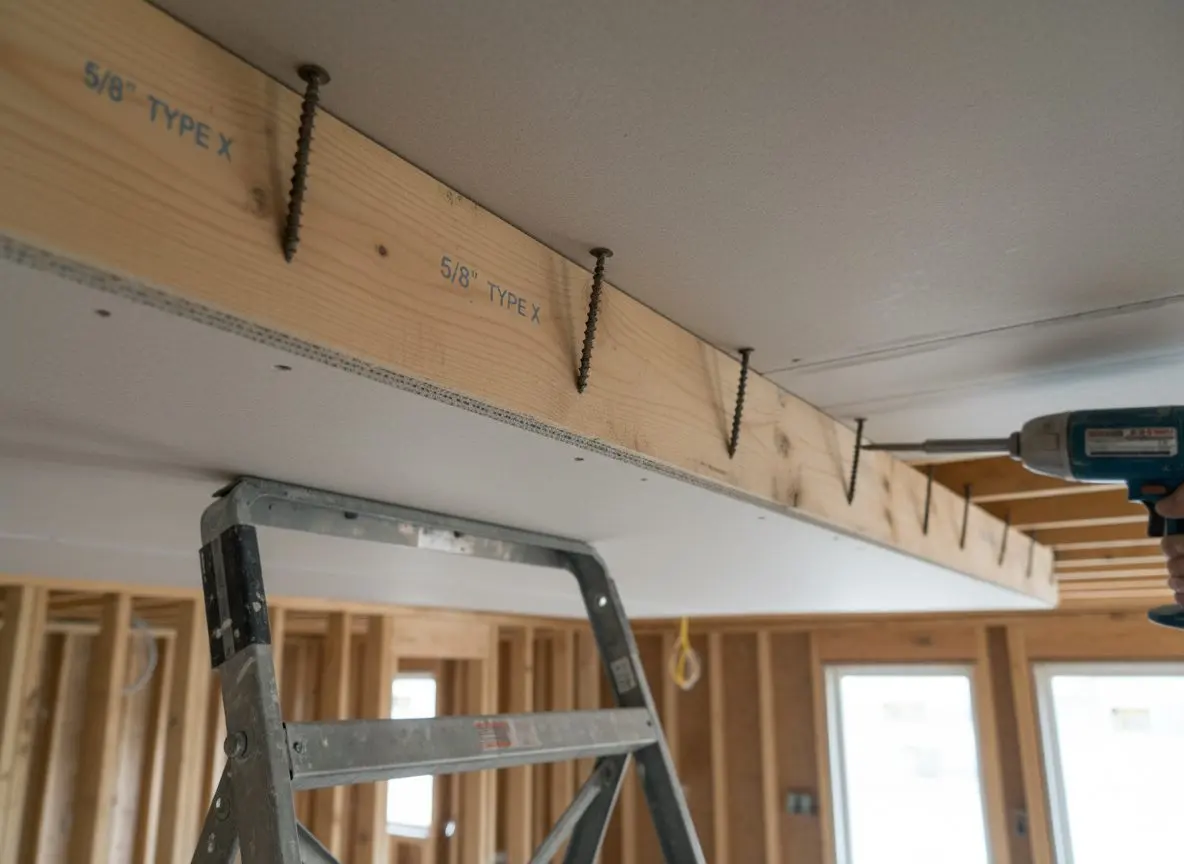
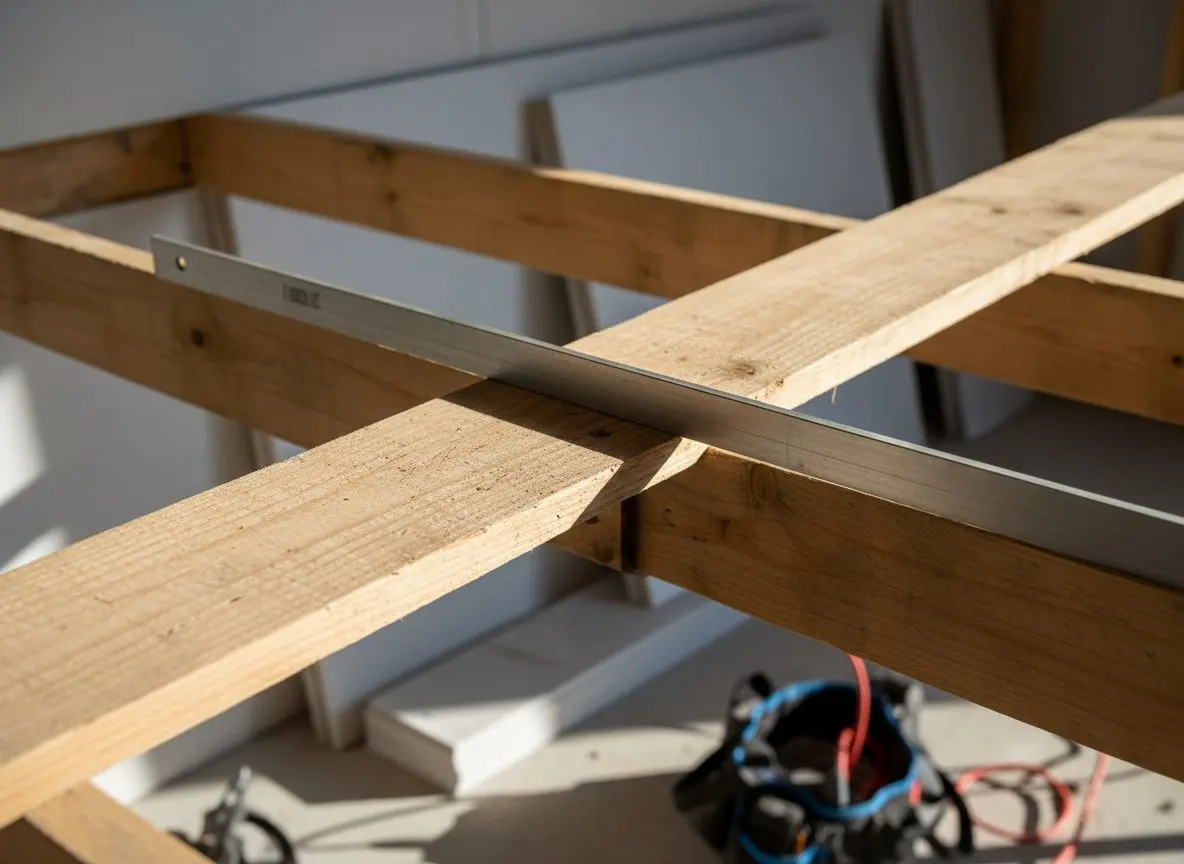
- Five-eighths board overhead as standard
- Sheets run across the joists, never with them
- Screws at seven inches through the field
- Sag-resistant board on 24-inch centers
- Joists strapped into one plane first
- Paper tape at every ceiling-to-wall angle
Call and somebody will come and look at the wall, say which of these your job actually needs, and put the answer in writing.
(717) 555-0164What moves the price of a ceiling
Overhead work is priced in days rather than square feet, because every stage of a ceiling is slower than the same area on a wall and most of the cost is in what has to come down first.
- What comes down first
- An open joist bay is the cheap version. Scraping popcorn, or taking plaster and lath down and carrying it out of an upstairs room, is a day or more before a single new sheet arrives on site.
- Ceiling height and access
- A standard eight-foot lid is worked off a bench. A stairwell, a vaulted room or a double-height hall needs staging built and moved, and every coat is applied from it, which is slow before it is anything else.
- Lights and penetrations
- Every can light, fan, sprinkler head, duct and hatch is a hole cut, framed and finished by hand. A plain rectangle of ceiling is quick work; a kitchen lid with a dozen openings in it is not.
- What is above the ceiling
- Insulation, wiring and old pipework all have to come out or be worked around before board goes back. A floor above rather than an attic also means the joists cannot be reached from the other side.
- Finish level and light
- A bedroom lid under matt paint is finished to Level 4. A ceiling crossed by low sun or lit from a skylight wants Level 5, which is a full skim, another sand and another prime over the whole area.
- Emptying and protecting the room
- Dust off a ceiling falls on everything. An empty room is fastest, and furniture to shift and wrap, a fitted carpet to protect or a kitchen to seal off all add setting-up time to every visit.
Which of these your ceiling carries is decided by standing under it, and the quote names the ones we found. Get a free quote
Six steps between your call and a finished room
Three to five days on site for a typical room, and the loud, dusty half of it is finished in the first two.
Call and we will book the look, usually inside the same week, so you know what the job involves before you commit to it.
Get a free quoteThe cheap decisions overhead that cost a ceiling later
A ceiling is the one surface in a room nobody looks at until it is wrong.
There is no figure to put here. Remodeling Magazine's Cost vs. Value report prices whole projects for the Middle Atlantic region and has never carried a ceiling as a line of its own, so anybody offering you a percentage return on popcorn removal has made it up. What holds value is which decisions get made while the lid is open.
Insulation into a top-floor ceiling, five-eighths board rather than half-inch, texture taken off rather than drywalled over, and lights placed before hanging rather than cut in afterwards all cost very little now. Every one of them is a ceiling down again later.

Ice dams, plaster keys and hand cut joists
Ice dams put February water through upstairs lids, rowhouse ceilings are plaster keyed to lath rather than board, and old joists are rarely in one plane.
- February water comes through upstairs lids
- Snow melts on a warm roof, freezes again at the cold eaves and backs water up under the shingles. It shows on a bedroom ceiling weeks later as a brown ring, and the ring is rarely under the leak, because water tracks along a joist before it drops.
- Rowhouse lids are plaster keys on lath
- In Midtown, Uptown and Allison Hill the ceilings are three-coat plaster pushed through wood lath, and the keys behind it snap with age and vibration. The paint holds the panel up long after the plaster has stopped being attached to anything.
- Joists here are hand-cut and out of plane
- Pre-1940 framing was cut on site from rough timber, and the undersides of the joists rarely line up with one another. Board follows whatever it is screwed to, so the ceiling is strapped across the joists and brought true before a sheet goes up.
Ceilings finished in Linglestown, Camp Hill and Hershey
Six ceilings finished in the last year, with the town each one was in and what was above or around it.
-
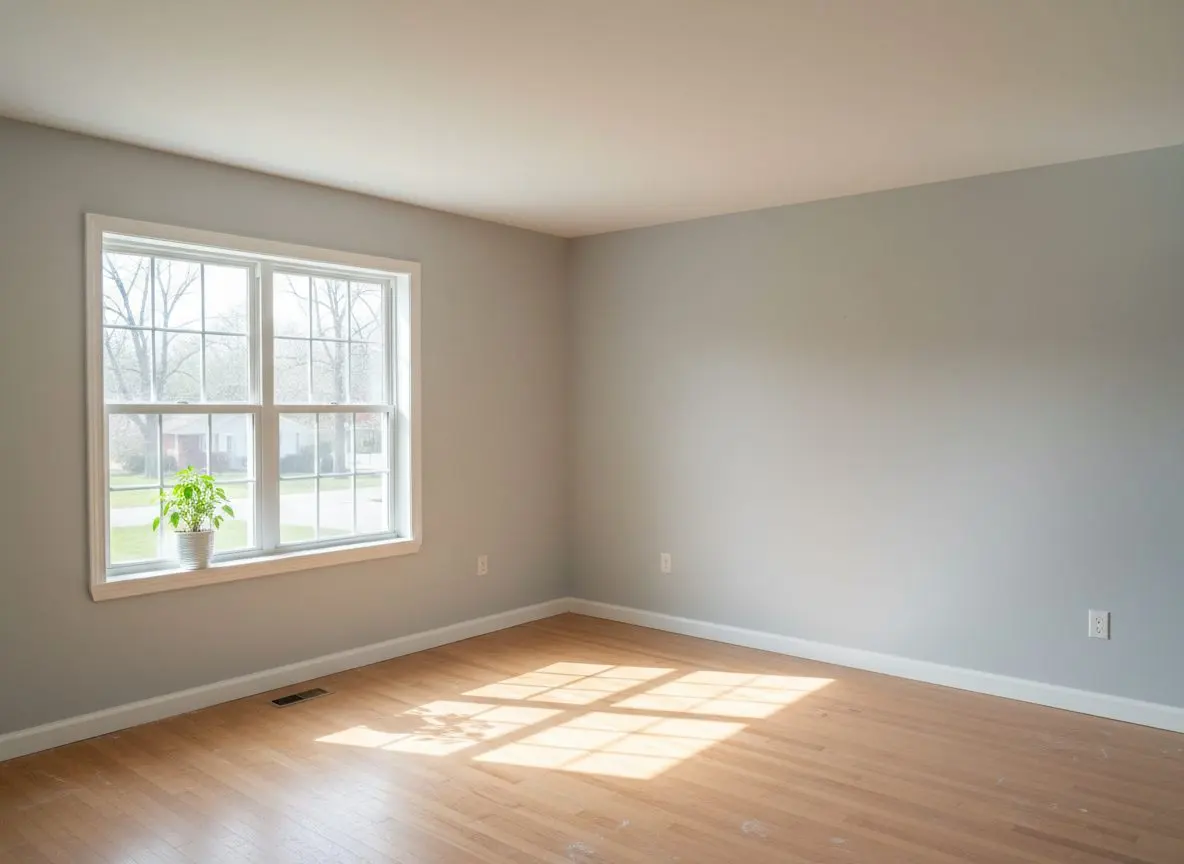
Popcorn scraped from four rooms
Linglestown
A 1961 ranch with sprayed lids throughout. Tested first, scraped wet, skimmed to Level 5 and primed, with the attic insulation left undisturbed.
-
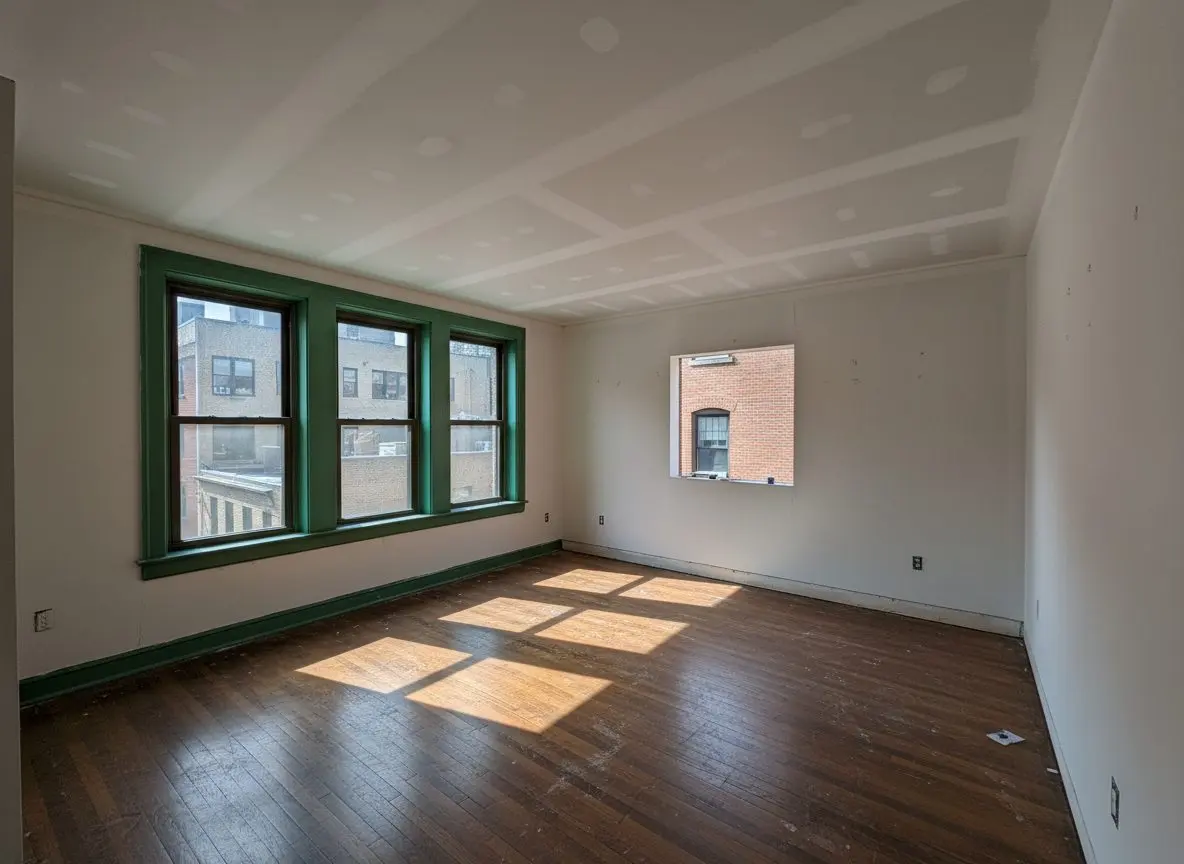
Lath ceiling down and rehung
Midtown
A front room lid bowing two inches off the lath. Taken down, joists strapped level, then hung in five-eighths and taped to Level 4.
-
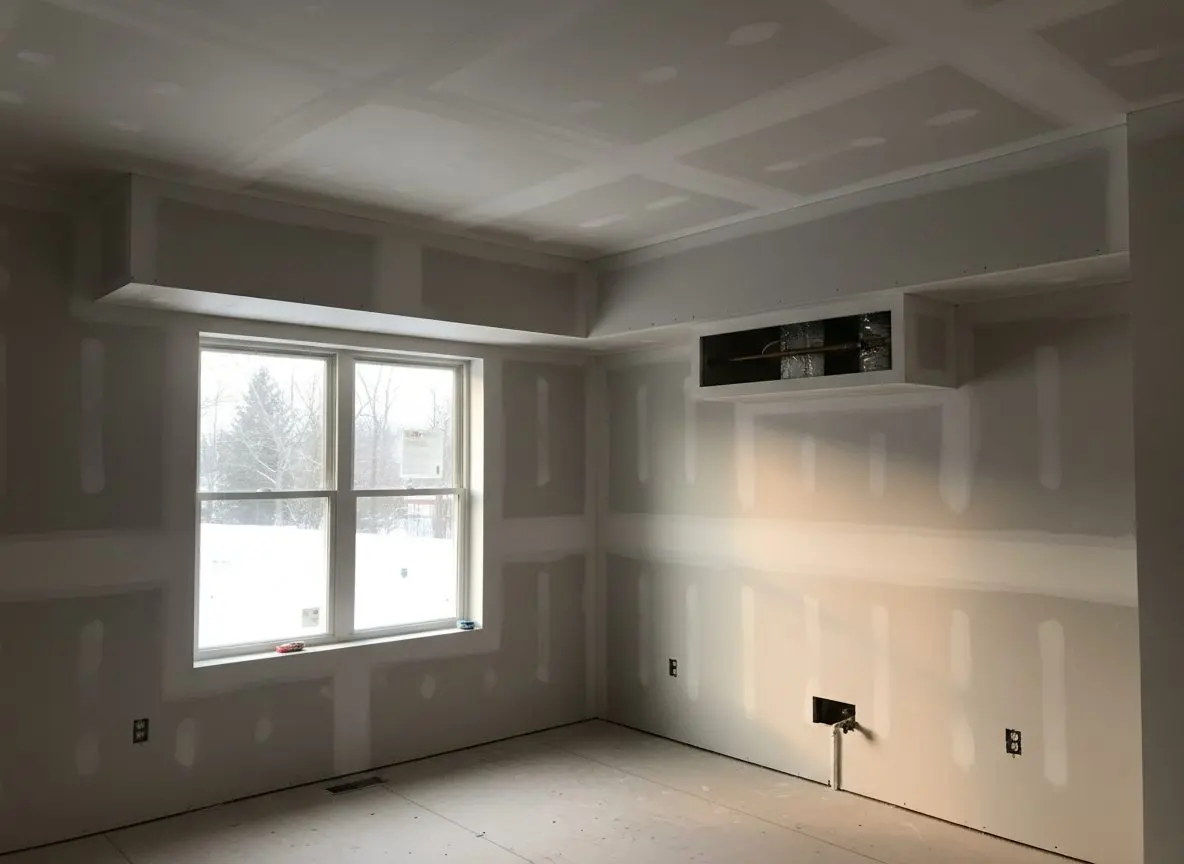
Kitchen soffits boxed in
Hershey
Ductwork and a steel beam boxed out above new units, with an access panel framed in over a shut-off valve before anything was taped.
-
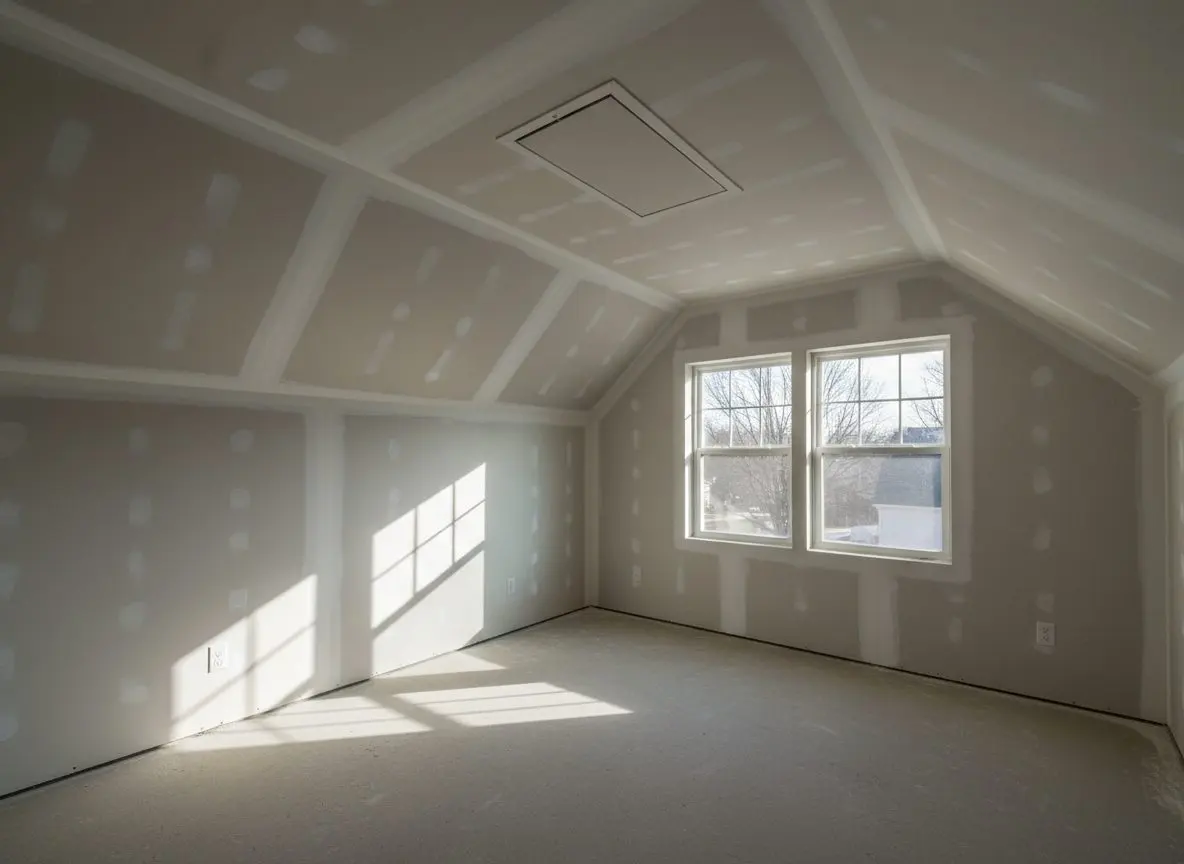
Garage ceiling in Type X
New Cumberland
A bedroom sitting over the garage. Type X board throughout, sealed at the perimeter, and the loft hatch reframed so it closed properly.
-
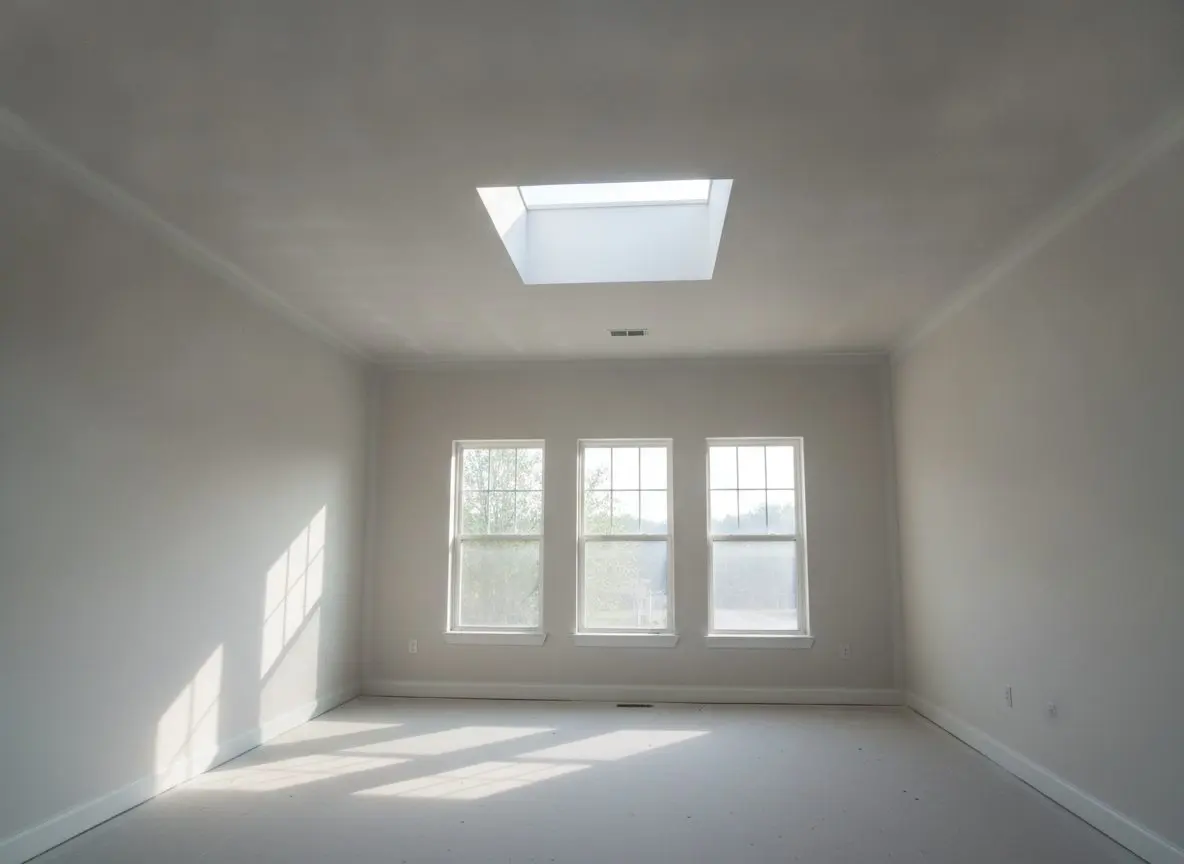
Ceilings skimmed under a skylight
Camp Hill
Two rooms where every joint showed by mid-morning. A full Level 5 skim overhead, sanded with extraction and primed in a day each.
-
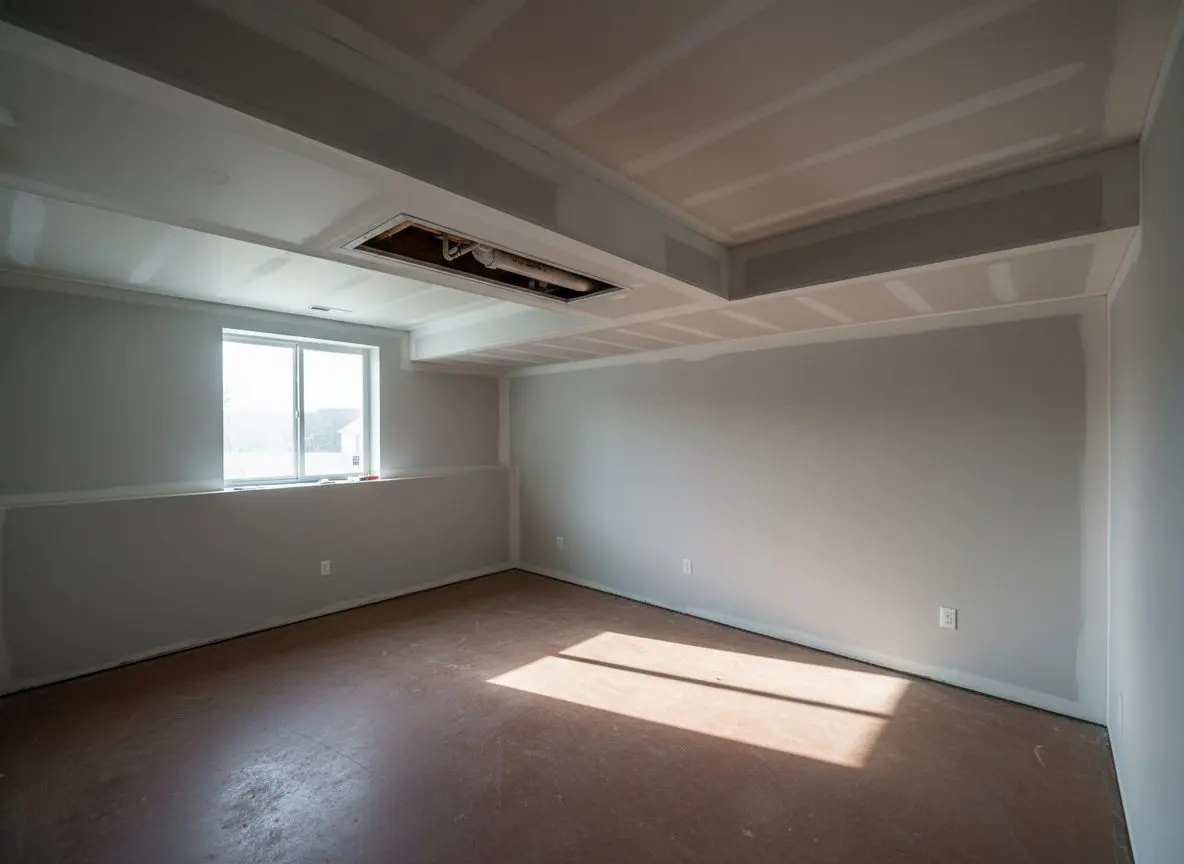
Basement ceiling hung
Lemoyne
Waste pipes and a beam boxed in below the joists, with framed access panels at two cleanouts and the whole lid finished to Level 4.
Customers on the lid that came down
-
Rated 5 out of 5
Tenant moved out and left four holes and a kicked-in closet door. Patched, matched and primed in a day and a half. I had the keys back on the Thursday.
Warren S. Enola Drywall Repair -
Rated 5 out of 5
A plumber cut a two foot strip out of our kitchen ceiling to reach a leaking supply line and left it open. They hung new board and matched the texture, and I cannot find the line from the table now.
Alanna F. Hummelstown Ceilings -
Rated 5 out of 5
Water came up through the basement floor after the August storm and I thought it was a mop and a fan job. They cut the board back higher than I wanted and ran the fans four extra days. No smell since.
Terri D. Linglestown Water Damage Repair
Call and ask for a couple of addresses near you where we finished a job this year.
Get a free quoteFAQs
Frequently asked questions
Questions people ask about ceiling work
Does my popcorn ceiling contain asbestos?
It might, if the house was sprayed before the early eighties, and it has to be tested before anybody scrapes it. A lab test on a small sample is cheap and takes a few days. If it comes back positive the removal is licensed abatement work and not ours, and hanging over it is often the sensible answer instead.
How long does a single ceiling take?
A plain bedroom lid is a day to strip or board and two to three days to tape, coat and sand, because each coat has to dry before the next. Popcorn removal adds the wetting and scraping day at the front, and a Level 5 skim adds one at the back, so most single ceilings run three to five days.
How much mess does taking a ceiling down make?
More than any other job in the trade, which is why the room gets emptied and sheeted first. Plaster and lath come down in dust and lumps, doorways are zipped, and the floor is covered wall to wall. We vacuum before leaving, but plan to keep the room shut for the days we are in it.
Why five-eighths board on a ceiling and half-inch on walls?
Because a ceiling is fighting gravity and a wall is not. Five-eighths is stiff enough to stay flat between joists at twenty-four-inch centers, where half-inch will slowly dish between them and show a shadow at every joint. Half-inch is only used overhead on short runs at sixteen-inch centers.
There is a brown ring on my ceiling. Do you just patch it?
Not until we know where the water came from and whether anything above is still wet. We open a small hole and take a meter reading, and if it is live the roof or the pipe is somebody else's first job. Painting a stain out with a blocking primer hides it, and it comes back the moment the ceiling is wet again.
Can you fit new lights and a fan while the ceiling is down?
We cut and frame the openings, and an electrician does the wiring. An open ceiling is the cheap moment for both, so it is worth having them booked to come between us taking it down and us hanging it back. Tell us the layout at the measure and the framing goes in to suit it rather than being cut afterwards.
My ceiling is bowing in the middle. Is that dangerous?
Treat it as urgent. A bow in an old plaster lid means the keys have broken off the lath over an area much larger than the bow, and that comes down as a slab rather than as crumbs. Keep people out from under it, do not push at it, and we will sound it and tell you whether it is a section or the whole ceiling.
How do you reach a stairwell or a vaulted ceiling?
With staging built inside the space rather than off a ladder, slower to set up and safer to work from. A stairwell needs a platform bridging the flight, and a vaulted room needs it moved for each coat. It is a real part of the price, so it is named on the quote instead of appearing as a day nobody expected.
Where does the furniture go while you work?
Out of the room if at all possible, because dust from a ceiling falls on everything in it. If something cannot be moved it gets pushed to the middle and wrapped, though that costs time on every visit and makes the sanding slower. We will tell you at the measure which of the two your room is.
Do you prime the ceiling, or hand it over bare?
We prime it, and that is included. A primed ceiling is what a decorator wants to be given, and primer is also the coat that shows up any joint needing one more pass, so what you are handed has already been checked. We do not paint the finish coats, and we will say when the surface is ready for them.
Can you do the ceiling and leave the walls alone?
Yes, and it is most of what we do overhead. The wall angle gets taped and coated as part of the ceiling, so expect a band a few inches down the wall to need repainting where the new tape lands. If the walls are papered or in a color you cannot match, say so first and we will keep the line as tight as possible.
Why is a ceiling dearer than the same area of wall?
Because every stage of it is slower. The board is heavier and wants a lift or a second pair of hands, compound sags off a blade held upward so the coats go on thinner and there are more of them, and sanding is done looking up with dust falling on the whole room. Call it half again the labor per square foot.
Harrisburg Drywall Pros
Flood and burst-pipe damage moves ahead of the ordinary line, no matter what else is booked.
Harrisburg Drywall Pros hangs, tapes, finishes and repairs board across Harrisburg and the river towns nearby, in rowhouses with plaster on lath as often as new construction. Three crews finish around a hundred and ninety jobs a year, and flood or burst-pipe damage is fitted in ahead of the ordinary line. Trading here since 2012.
Why the river towns call Harrisburg Drywall Pros first
- Fourteen years working the river towns, trading since 2012
- We sound the plaster and check the lath before putting a number on anything
- Flood and burst-pipe damage moves ahead of the ordinary line
- Freeze-thaw cracks are taped and bedded, not just filled over
- Nothing is added to the quote later without you agreeing to it first
If the river has left a stain on a lower wall, an old ceiling needs opening up, or a room needs drywall from scratch, call (717) 555-0164 and somebody will come and look at it. The written quote follows the visit, broken down room by room, and nothing gets added to it later without you agreeing first.
Give us a call
office@harrisburgdrywallpros.com
Send us a message
922 N 3rd St, Harrisburg, PA, 17102
Where to find us