
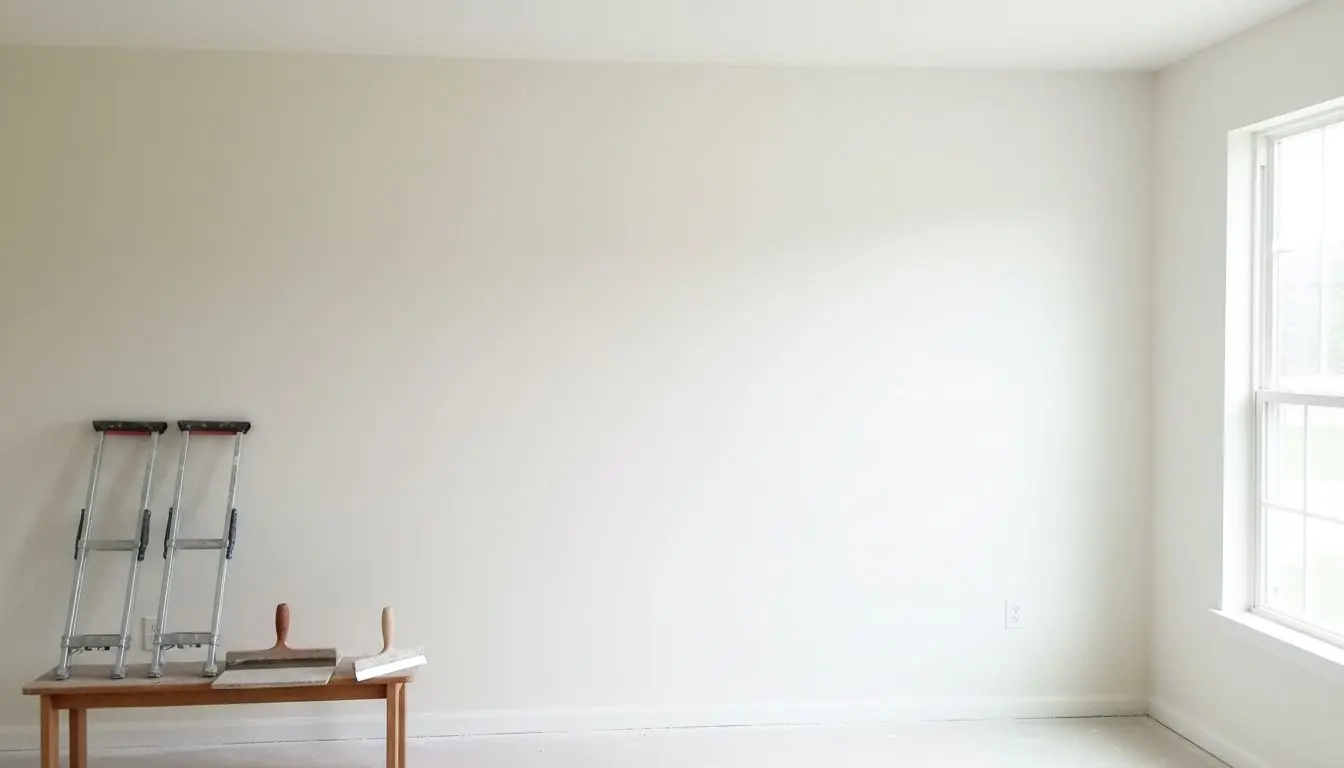
Texture and Finishing in Harrisburg
Taping, skimming and texture matching on walls and ceilings
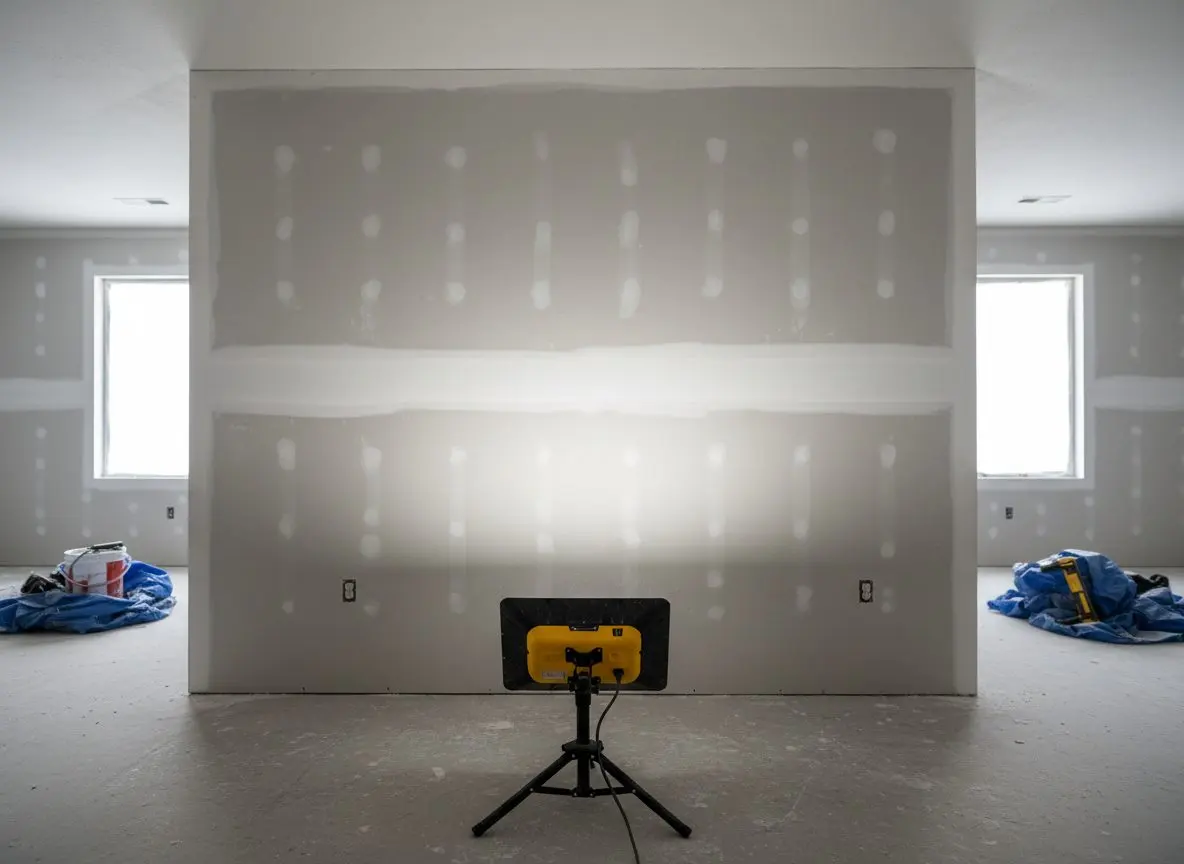
Samples knocked down and held against your wall before we spray, three coats over every joint, and the finish checked under raking light rather than under a bulb.
The surface rather than the structure
You end up with a surface that reads as one thing, whether it is glass flat or carrying a texture that matches the next room.
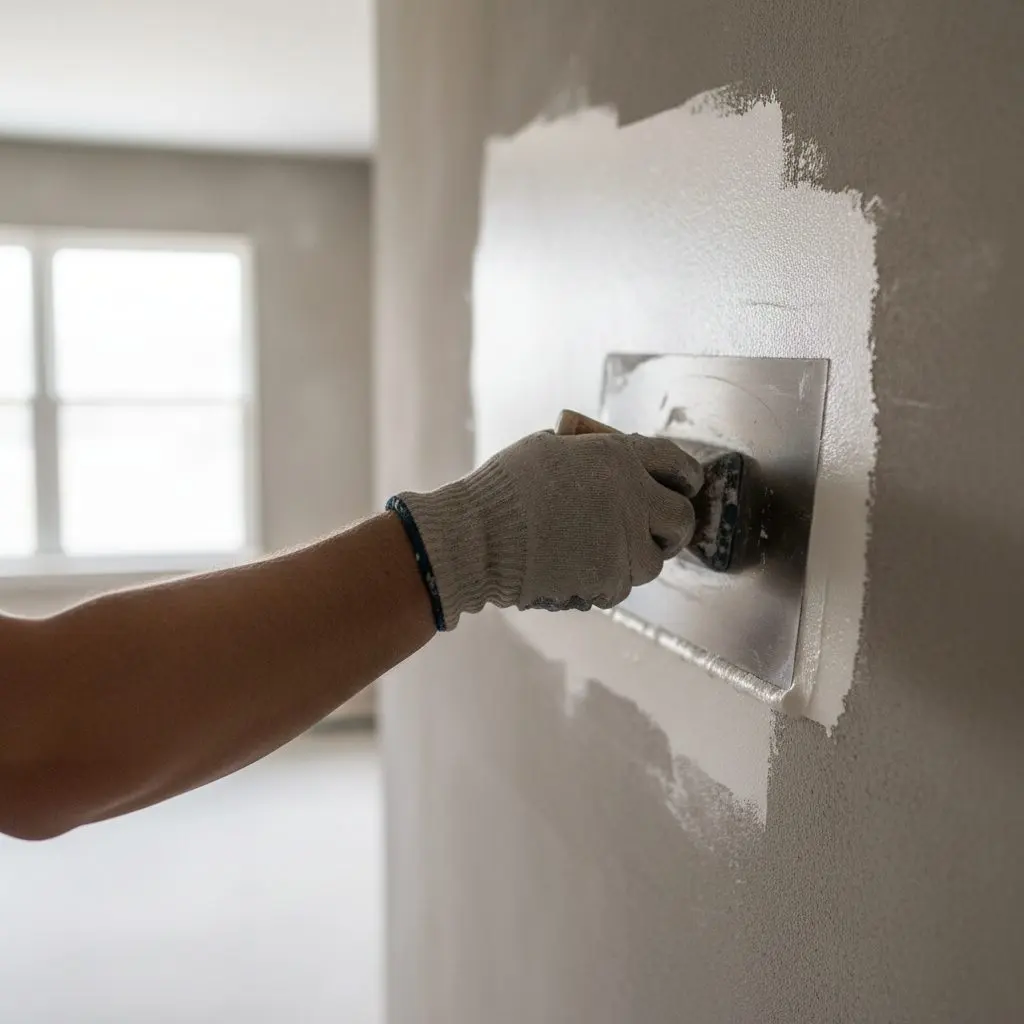
This is the surface rather than the structure. Taping and mudding new board, skimming a whole wall or ceiling to Level 5, matching knockdown, orange peel or sand swirl, and smoothing out texture you no longer want. If the board itself is going up, that is drywall installation. If there is a hole or a crack to deal with first, start at drywall repair.
About sixty finishing jobs a year, ranging from a single matched patch on one wall to skimming every room in a 1970s house back to flat.
The regular jobs are taping and finishing new board, skim coating a wall or ceiling to Level 5, matching an existing texture around a repair, and taking heavy texture off and leaving it smooth. Compound is mixed to the bag rather than watered to make it move faster, and each coat is left to dry through instead of being chased with a heater, because a coat forced dry shrinks back over the joint and gives you the shallow trough down a wall that shows up under any lamp set close to it.
A homeowner in Camp Hill who wants the knockdown taken off before repainting, and a builder in Hershey handing over new construction that needs everything taped and finished to Level 4 by a date.
Ask for a free sample match at (717) 555-0164 and see it against your own wall. You will stop choosing where to put lamps so a wall does not get caught!
Tape, skim, sample boards and a primed wall
Everything between bare board and a wall ready for paint.
- Taping and mudding new board to Level 4
- Full skim coats to Level 5 on walls and ceilings
- Knockdown, orange peel and sand swirl matched
- Heavy texture removed and left smooth
- Sample boards made up before any spraying
- Sanding with vacuum extraction where it fits
- Primed and handed over ready for the painter
Match the texture, or take the whole wall smooth
A good match on a small area costs a fraction of smoothing a room, and most walls take one.
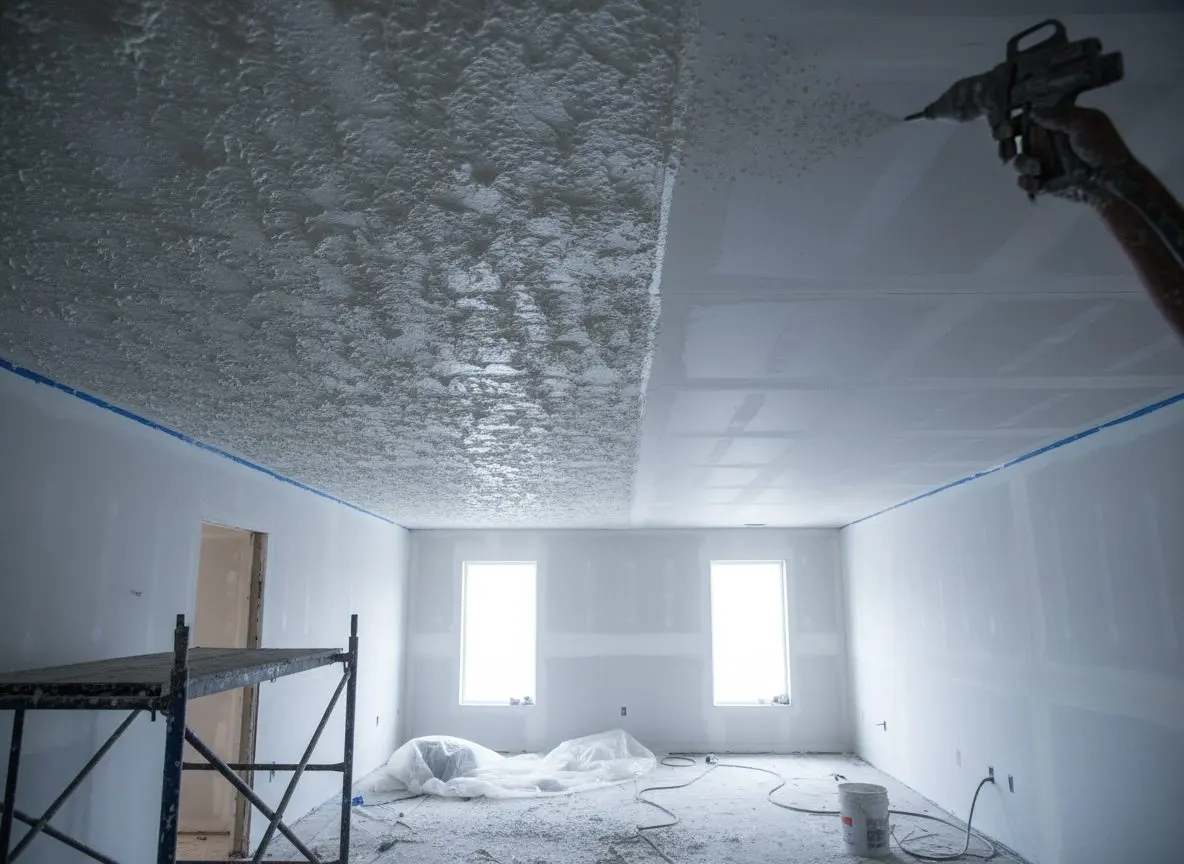
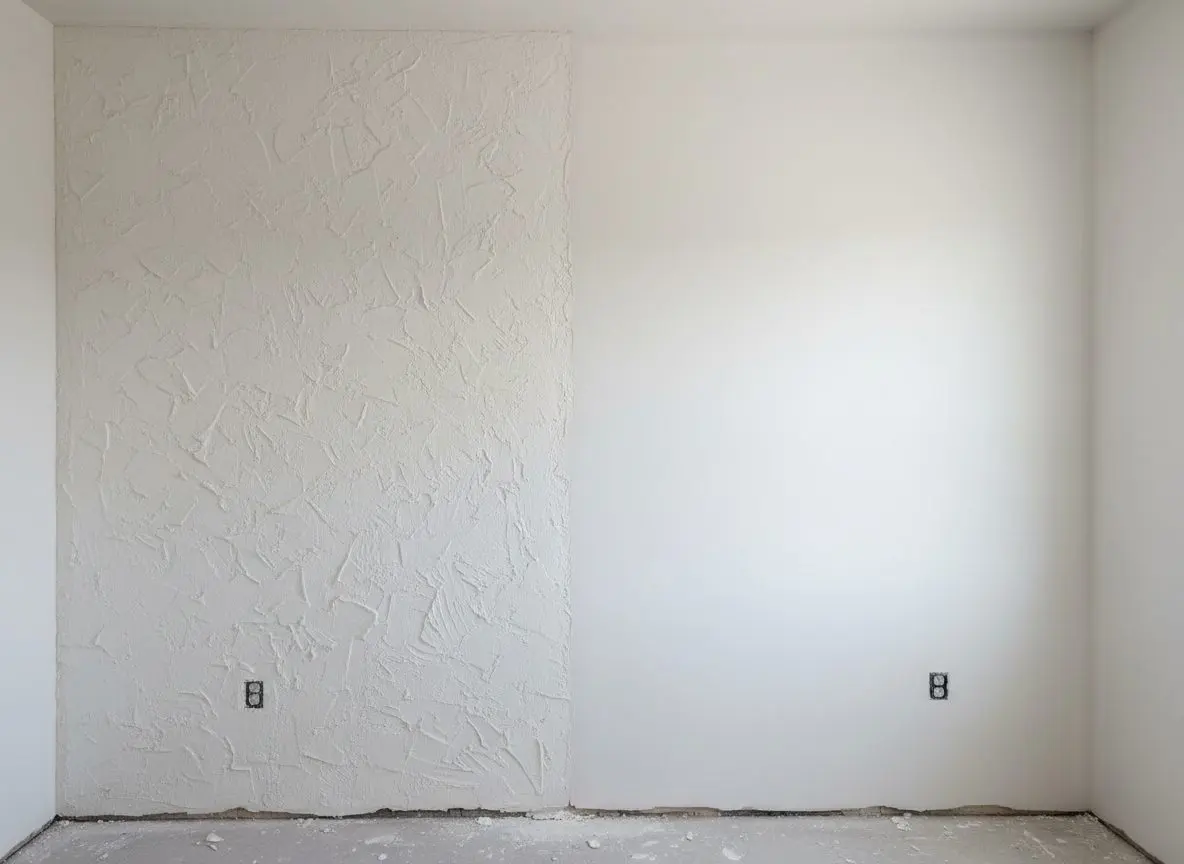
Matching is right when the existing texture is a sprayed pattern rather than a hand finish, when the repair sits away from a corner, and when the wall is being repainted anyway. Knockdown and orange peel both match well. We spray a sample, knock it down at the same timing, and hold it against the wall first.
Smoothing the whole wall makes sense when the texture is hand-troweled, when several repairs are spread across one surface, or when you were going to remove it eventually. Chasing a match across five patches costs more than one skim coat, and you still end up able to find them in low sun.
We say which at the visit, and on most single repairs the answer is the cheaper one. The test is a sample against your wall in the light that room actually gets, not a photograph and an opinion. If a match will be close but findable, you will be told that before the work is booked rather than after it is sanded.
Mixed to the bag, dried through and light checked
Compound mixed to the bag, three coats each feathered wider, and every wall light-checked before it is primed.
Compound is mixed to the manufacturer's ratio rather than thinned to make it spread faster, because extra water means extra shrinkage and a trough down the joint.
Setting-type compound goes on for the bed and fill coats and all-purpose for the finish, and each coat dries through before the next rather than being pushed with a heater. Joints are feathered wider each pass, ten inches on the bed, twelve to fourteen on the fill and eighteen or more on the finish.
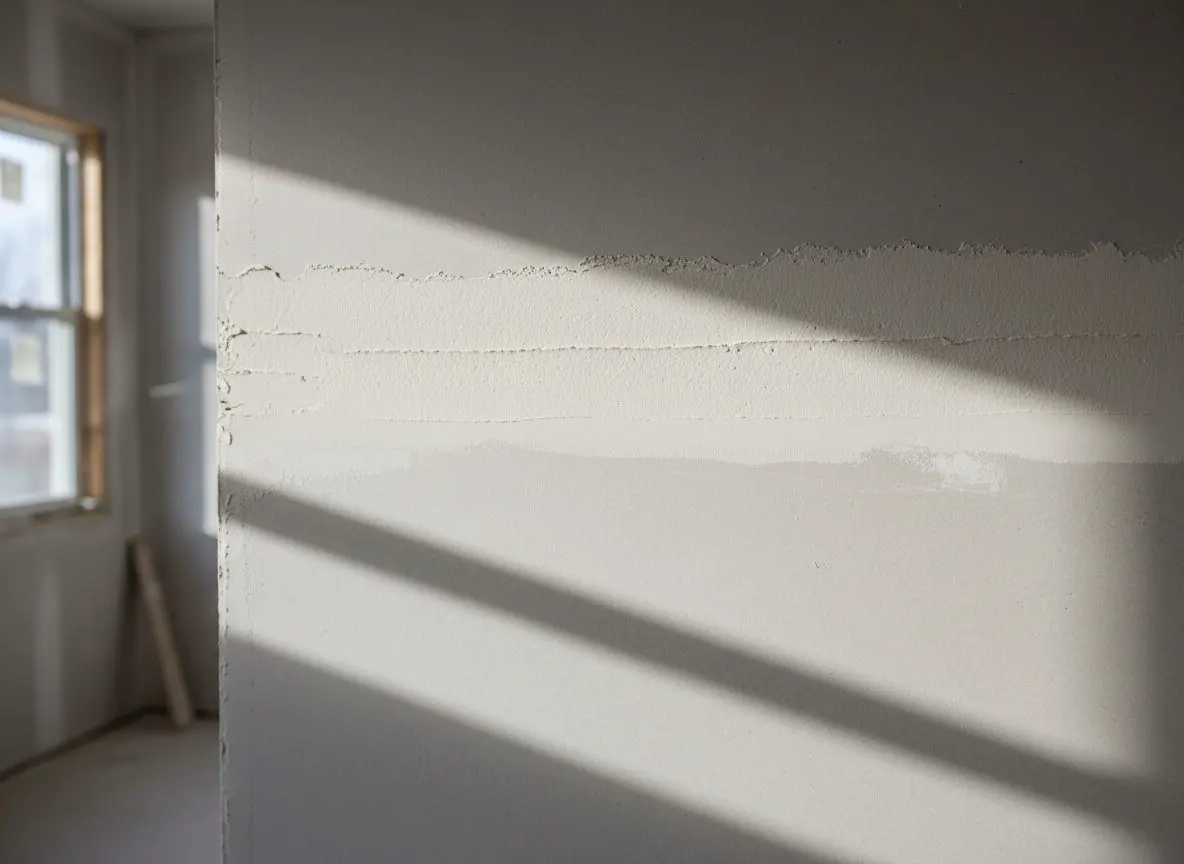
Finish levels follow ASTM C840 and are agreed per room in writing. Every wall is checked with a work light held flat against the surface before it is signed off, which is the only way to see what a low sun will find.
- Compound mixed to the bag, never thinned
- Setting compound bedding, all-purpose finish
- Coats feathered ten, twelve and eighteen inches
- Each coat dried through, not forced
- ASTM C840 levels agreed per room
- Every wall light-checked before priming
Call and somebody will come and look at the wall, say which of these your job actually needs, and put the answer in writing.
(717) 555-0164What moves the price of finishing a wall
Two walls of the same size price differently because the cost is in the number of coats, the drying time between them and how hard the light in that room is going to look.
- Finish level
- Level 4 is the standard price. Level 5 adds a skim over the entire face, another sand and another prime, and on a large open room that is an extra day of labor and a noticeable amount of compound.
- Matching an existing texture
- Matching means sample boards, drying time and sometimes a second attempt. A hand-troweled finish from the twenties can take three tries. A sprayed knockdown from the nineties is usually right on the first one.
- Removing old texture
- Scraping popcorn or wetting off a heavy knockdown is a full messy day before any finishing starts, and painted texture is worse again because the paint stops the water getting into it.
- Drying conditions
- Humid summer air here slows every coat, and a cold unheated room stops compound setting altogether. Either adds days to the schedule, and days on site are what a finishing job is actually priced on.
- Room size and openings
- A long uninterrupted wall is quick per square foot. Window returns, arches, soffits and corners are all slow work with a small blade, so a room full of detail costs more than its area suggests.
- Ceilings against walls
- Everything overhead takes longer. Compound sags off a blade held upward, the coats have to be thinner, and sanding a ceiling puts dust over the whole room rather than down one wall.
Which of these your room carries is settled by standing in it with a light, and the quote names the ones we found. Get a free quote
Six steps between your call and a finished room
Three to five days on site for a typical room, and the loud, dusty half of it is finished in the first two.
Call and we will book the look, usually inside the same week, so you know what the job involves before you commit to it.
Get a free quoteThe finish a buyer notices without knowing why
The finish is the only part of this trade a buyer looks at directly, usually without meaning to.
There is no figure to cite. Remodeling Magazine's Cost vs. Value report covers whole projects for the Middle Atlantic region and has never priced a skim coat or a texture match, because finishing is a stage inside a job rather than a job people buy on its own.
Any percentage offered to you here is invented. What holds value is the decisions.
A Level 5 finish in the one room with a big window, texture taken off rather than added, and a wall primed before it is painted all survive being lived with, while a wall finished to the wrong level in the wrong light is something the next owner notices on the first viewing and cannot say why.
August humidity, sprayed suburbs and troweled town walls
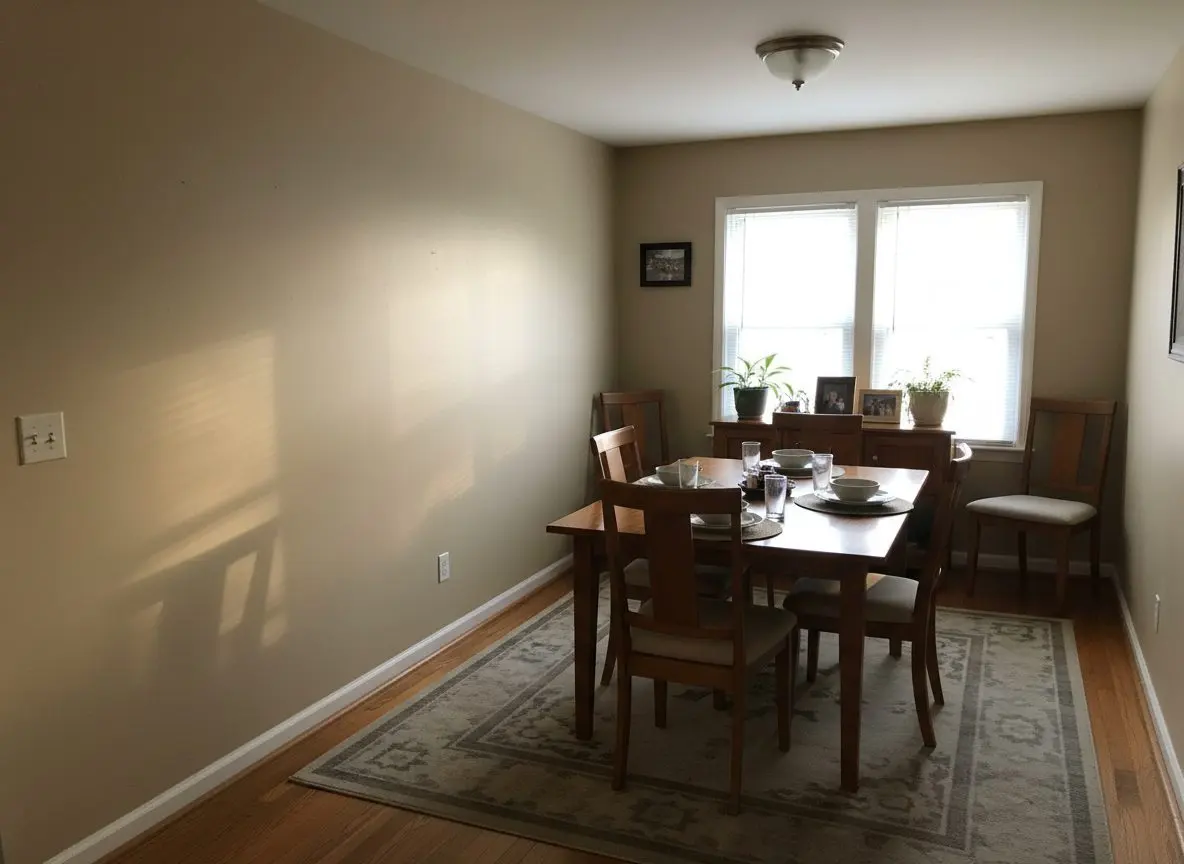
Summer humidity here stretches every drying time, suburban houses are covered in sprayed texture, and the troweled plaster in town almost never matches out of a hopper.
- Summer humidity stretches every coat
- July and August here sit humid for weeks, and compound that dries overnight in April can want a day and a half in August. We build that into the schedule rather than forcing it with heat, because a coat pushed dry shrinks and shows the joint.
- Suburban ceilings are sprayed, town ones are not
- The post-war houses out towards Colonial Park and Linglestown are full of sprayed knockdown and popcorn, which match well from a gun. The rowhouses in town have hand-troweled plaster, which does not, and that changes the answer on almost every job.
- Winter rooms are too cold to finish
- An unheated addition or a shell basement in January sits well under the temperature compound needs to set. Temporary heat has to go in and stay on through all three coats, or the finishing waits until the room is warm, and we say which at the quote.
Finishing in Hershey new construction and Uptown parlours
Six finishing jobs completed in the last year, with the town each was in and the surface that had to be matched or removed.
-
Knockdown taken off a whole floor
Camp Hill
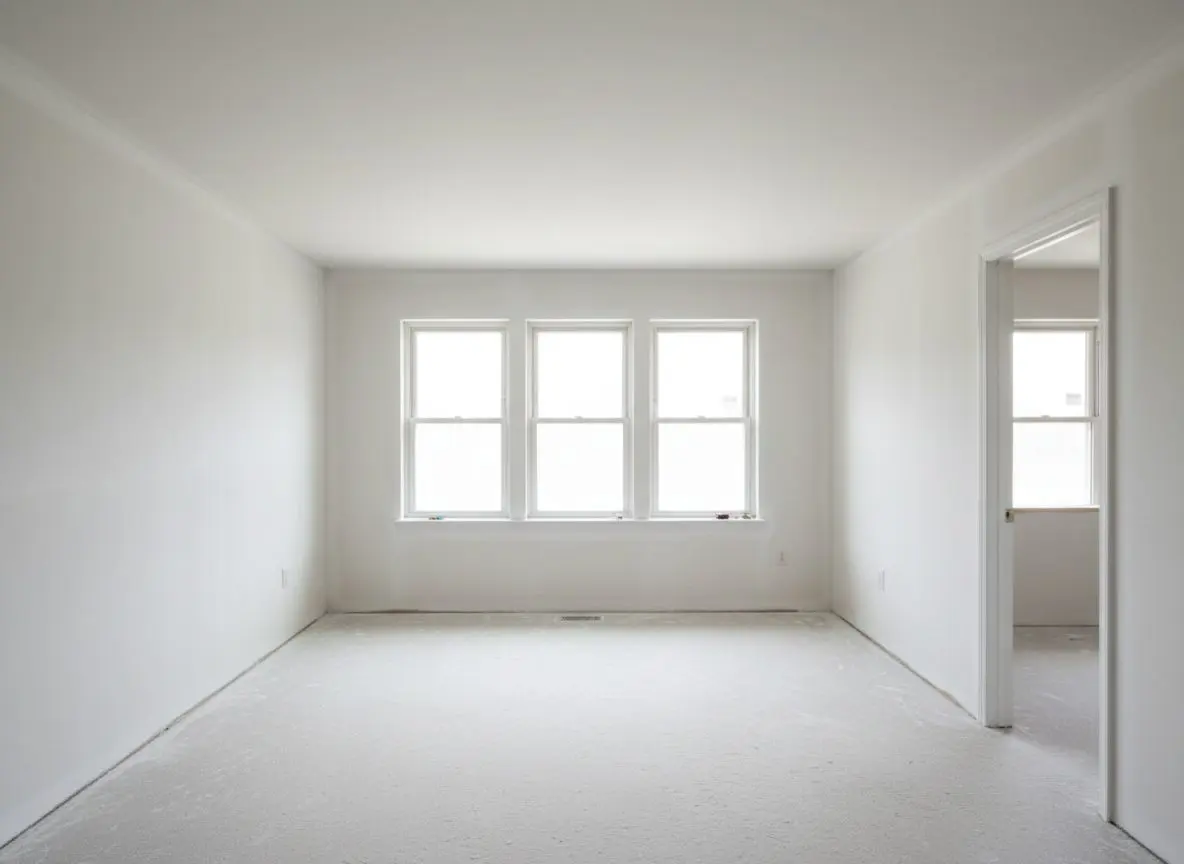
Four rooms and a landing wetted, scraped and skimmed flat. Two coats over the whole face, then sanded with extraction and primed.
-
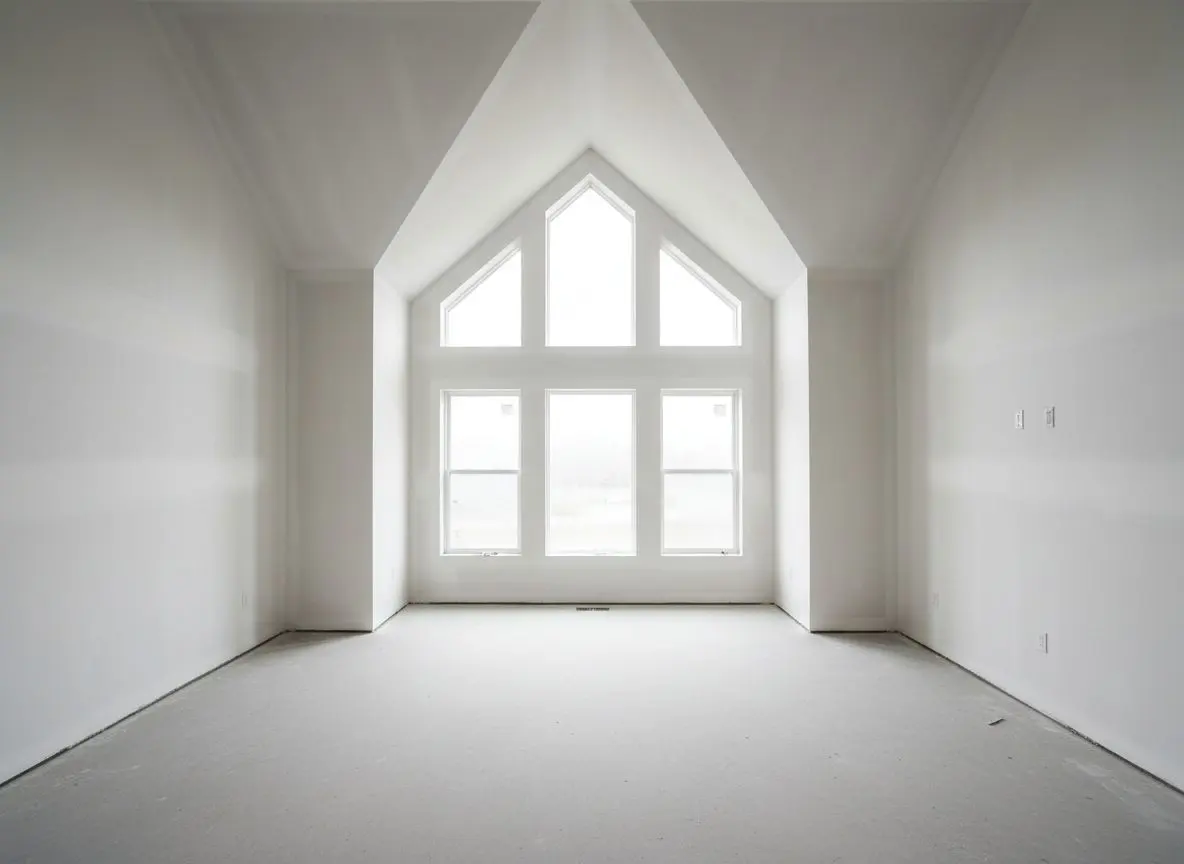
New construction taped to Level 4
Hershey
Nine rooms and two stairwells finished against a turnover date, with Level 5 in the double-height hall where the glazing rakes the wall.
-
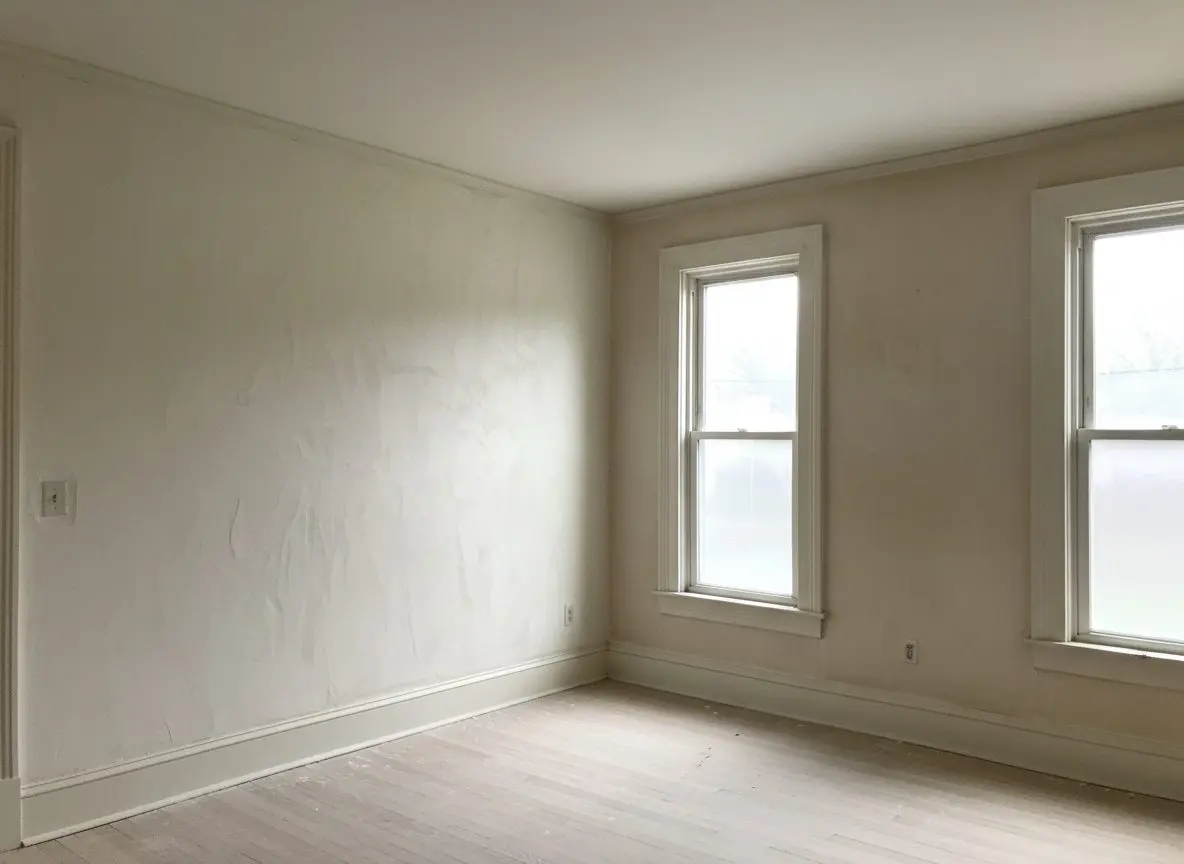
Troweled plaster matched by hand
Uptown
A repaired parlour wall in an 1890s rowhouse. Finish worked by hand with a small trowel to match the original sweep rather than sprayed.
-
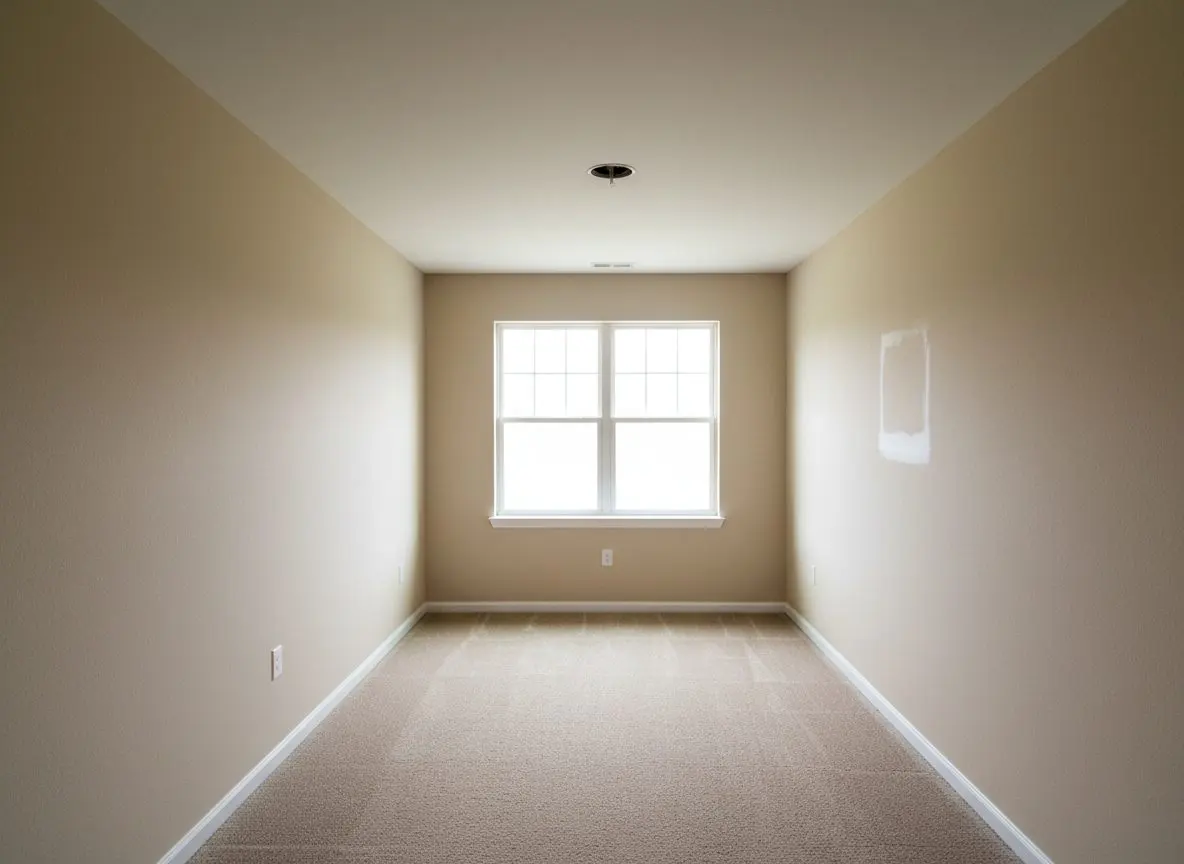
Orange peel matched around a patch
Enola
A single hallway repair on a sprayed wall. Three sample boards shot at different pressures and compared on site before spraying.
-
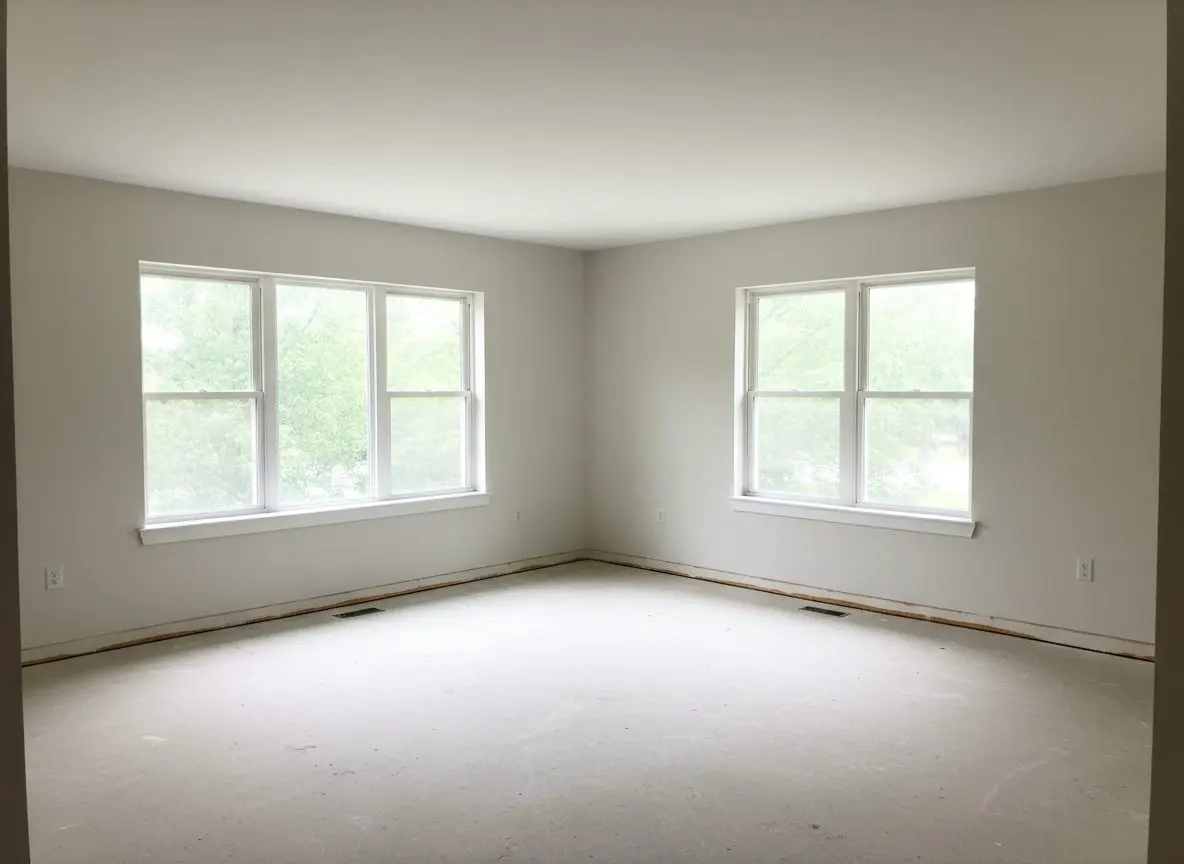
Ceilings skimmed to Level 5
Bellevue Park
Two reception rooms with south glazing, where every joint had shown. Full skim overhead, sanded with extraction and primed.
-
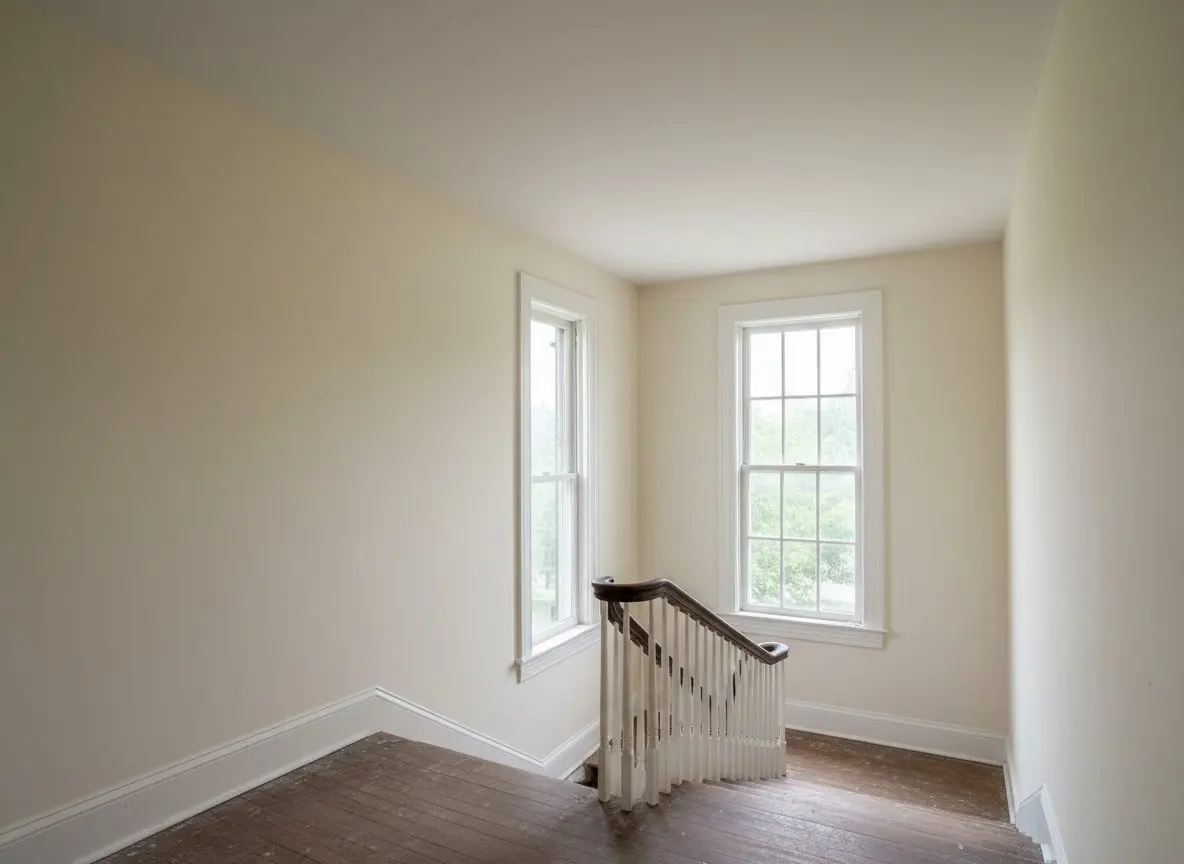
Stairwell skimmed after rewiring
Mechanicsburg
Chases cut down three floors, filled and taped, then the whole stairwell skimmed so no line of repair ran with the stringer.
What people said about the finish in their own light
-
Rated 5 out of 5
Tenant moved out and left four holes and a kicked-in closet door. Patched, matched and primed in a day and a half. I had the keys back on the Thursday.
Warren S. Enola Drywall Repair -
Rated 5 out of 5
A plumber cut a two foot strip out of our kitchen ceiling to reach a leaking supply line and left it open. They hung new board and matched the texture, and I cannot find the line from the table now.
Alanna F. Hummelstown Ceilings -
Rated 5 out of 5
Water came up through the basement floor after the August storm and I thought it was a mop and a fan job. They cut the board back higher than I wanted and ran the fans four extra days. No smell since.
Terri D. Linglestown Water Damage Repair
Call and ask for a couple of addresses near you where we finished a job this year.
Get a free quoteFAQs
Frequently asked questions
Questions people ask about finishing and texture
What is Level 5 and do I actually need it?
Level 5 is a thin skim over the whole board face so the wall is one material rather than compound over joints and paper in between. You need it where a big window or a sheen paint will rake across the wall. Under matt paint in a bedroom it is money you do not have to spend.
Can you get rid of the texture on my walls?
Yes. Light texture gets skimmed straight over, and heavier or painted texture usually has to be scraped or wetted off first before the wall is skimmed flat. Ceilings are the messy version of the same job, and both end up primed and ready for paint.
How close can you get to my existing texture?
On a sprayed pattern, close enough that you will lose it once the wall is painted. On a hand-troweled plaster finish it is harder, and we will show you a sample against the wall before you commit rather than after we have sprayed it.
How long before I can paint it?
A day after the final coat is sanded, in normal conditions. In a humid August week it can be two. We prime before handing over, and primer is also what shows up anything wanting one more pass, so what you get is a wall that has already been checked.
Why does my wall look fine until the sun comes round?
Because the light is raking along it rather than hitting it square, and that finds any change in plane that flat light hides. It usually means the joints were finished narrow rather than feathered wide, and the fix is a wider skim rather than more paint.
Is spraying or hand-applying texture better?
Neither is better, they suit different jobs. A hopper gun gives a consistent pattern fast and is right for a whole room or a ceiling, though it needs everything masked. Hand work suits small areas and older houses where the original finish was troweled and a sprayed pattern would look obviously new next to it.
Do I have to empty the room completely?
Ideally yes for a full skim, because everything gets a fine film of dust and we need the wall reachable from every angle. If that is impossible we can work around furniture pushed to the middle and wrapped, but it slows the job and the quote will say so rather than surprising you at the end.
Can you finish over old wallpaper?
No, and anybody who says yes is storing up a problem. Paper lifts under wet compound and the seams telegraph through within a season. The paper comes off first, the wall gets washed down and sealed, and then it is skimmed. That is a day you cannot skip.
What is that shadow down the middle of my wall?
Usually a butt joint that was finished too narrow, or a coat that was forced dry and shrank back. Butt joints have no tapered edge, so they need feathering out to two feet or more to disappear. It is fixable without taking anything off the wall, just with a wider skim and a resand.
Will the new texture match the room next door?
Only if we set out to match it, and that is worth deciding early. Rooms in the same house are often textured differently because they were done in different decades. We will bring a sample of the adjoining room's pattern and put both against the wall so you are choosing rather than guessing.
How bad is the dust from sanding?
It is the messiest part of the trade and it is manageable. Vacuum-assisted sanders take most of it at the wall, doorways get zipped and floors covered, and the room is vacuumed before we leave. A whole-room skim still makes more dust than a patch, so plan to be out for that day if you can.
Do you work to a builder's schedule?
Yes, and a good part of the finishing book is new construction and addition work booked by date. We take a start date, tape and finish to Level 4 or whatever the specification says, and hand over primed. If a trade before us runs late we will say what that does to the date rather than absorb it silently.
Harrisburg Drywall Pros
Flood and burst-pipe damage moves ahead of the ordinary line, no matter what else is booked.
Harrisburg Drywall Pros hangs, tapes, finishes and repairs board across Harrisburg and the river towns nearby, in rowhouses with plaster on lath as often as new construction. Three crews finish around a hundred and ninety jobs a year, and flood or burst-pipe damage is fitted in ahead of the ordinary line. Trading here since 2012.
Why the river towns call Harrisburg Drywall Pros first
- Fourteen years working the river towns, trading since 2012
- We sound the plaster and check the lath before putting a number on anything
- Flood and burst-pipe damage moves ahead of the ordinary line
- Freeze-thaw cracks are taped and bedded, not just filled over
- Nothing is added to the quote later without you agreeing to it first
If the river has left a stain on a lower wall, an old ceiling needs opening up, or a room needs drywall from scratch, call (717) 555-0164 and somebody will come and look at it. The written quote follows the visit, broken down room by room, and nothing gets added to it later without you agreeing first.
Give us a call
office@harrisburgdrywallpros.com
Send us a message
922 N 3rd St, Harrisburg, PA, 17102
Where to find us