
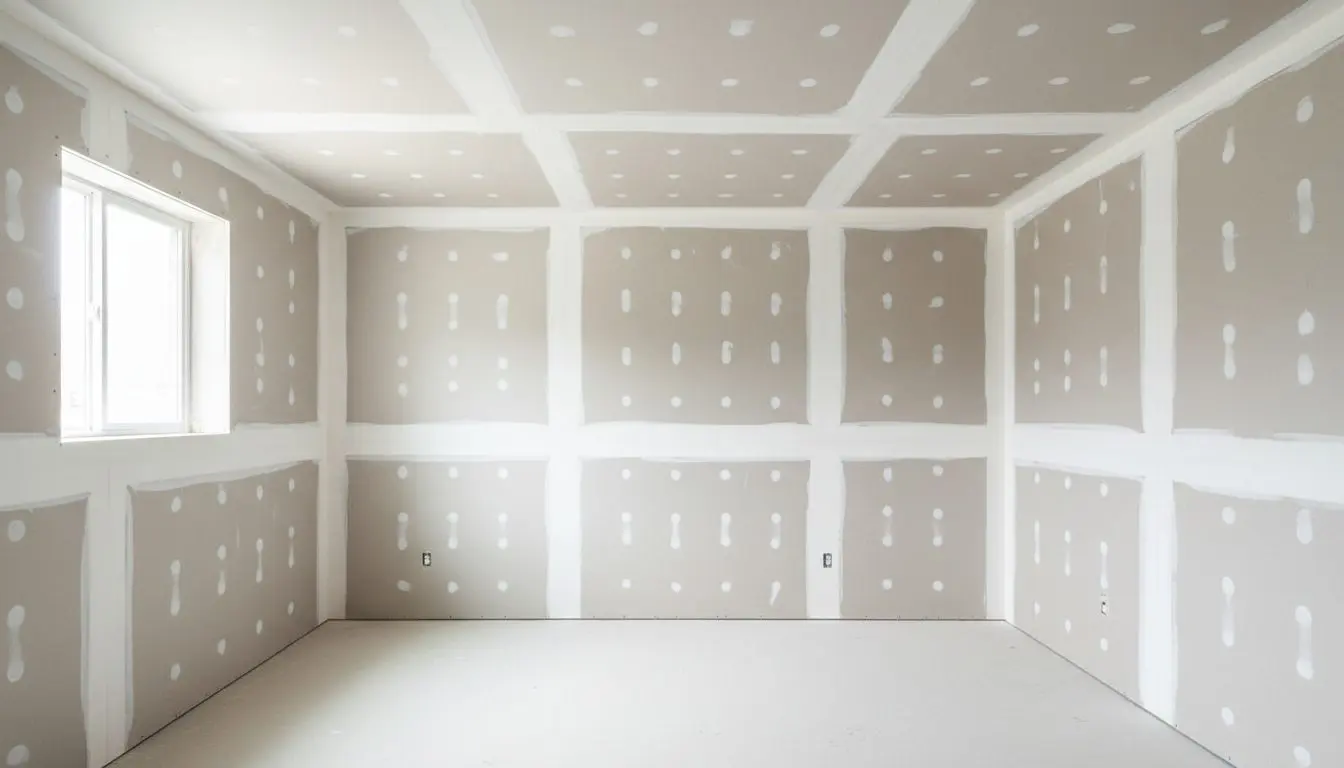
Drywall Installation in Harrisburg
New drywall installation, from one room to a whole build
Sheets cut outside, hung horizontally with the ends staggered, and screwed into framing rather than old plaster, so the wall stays flat once the heating comes on.
Basements, additions and rooms taken back to the studs
You end up with square, flat rooms that take a door, a baseboard and a coat of paint without a fight.
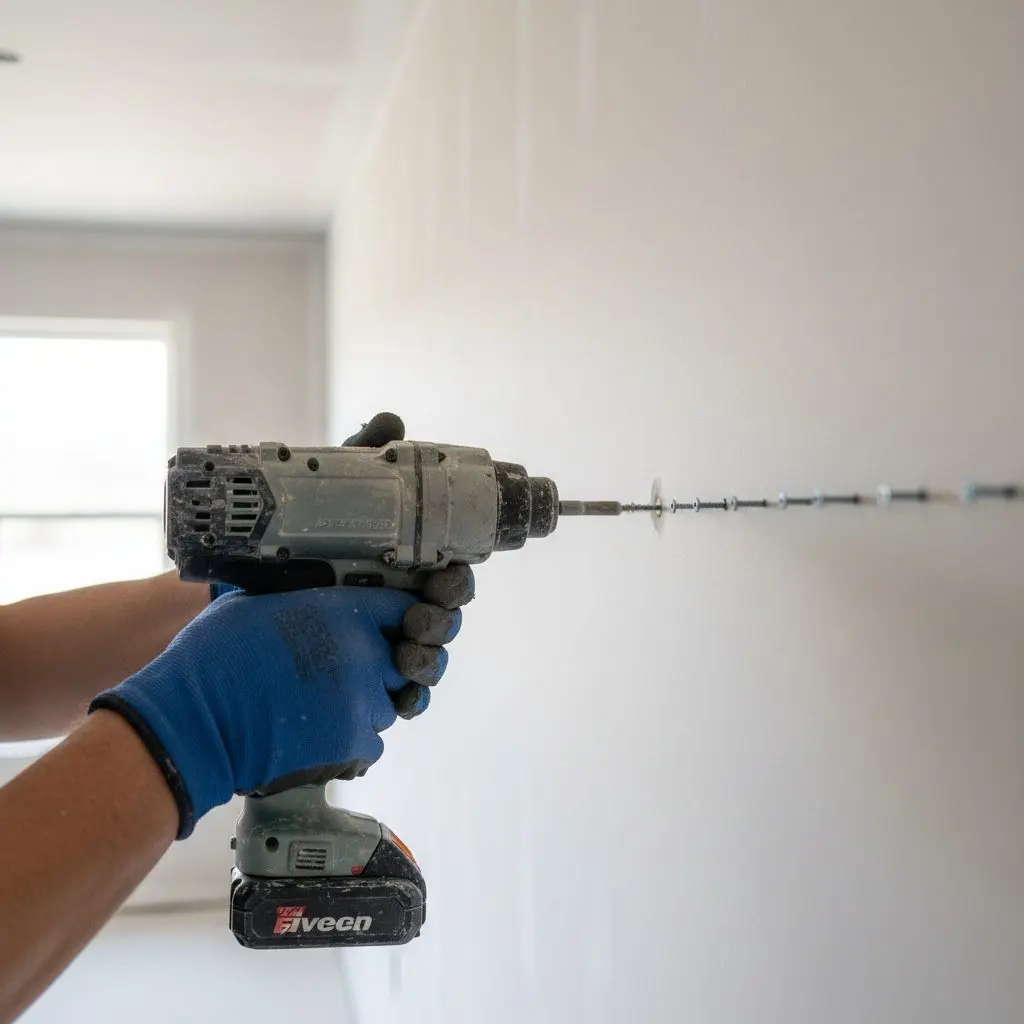
Installation is new board going up. Framing a basement, hanging an addition or a garage conversion, closing walls after wiring, or taking a room back to the studs and starting again. If the wall is already there and only part of it is wrong, that is drywall repair. If the board is sound and it is the surface that is wrong, it is texture and finishing.
Around seventy new board jobs a year, most of them basements, additions and full gut jobs in houses that went up before the war.
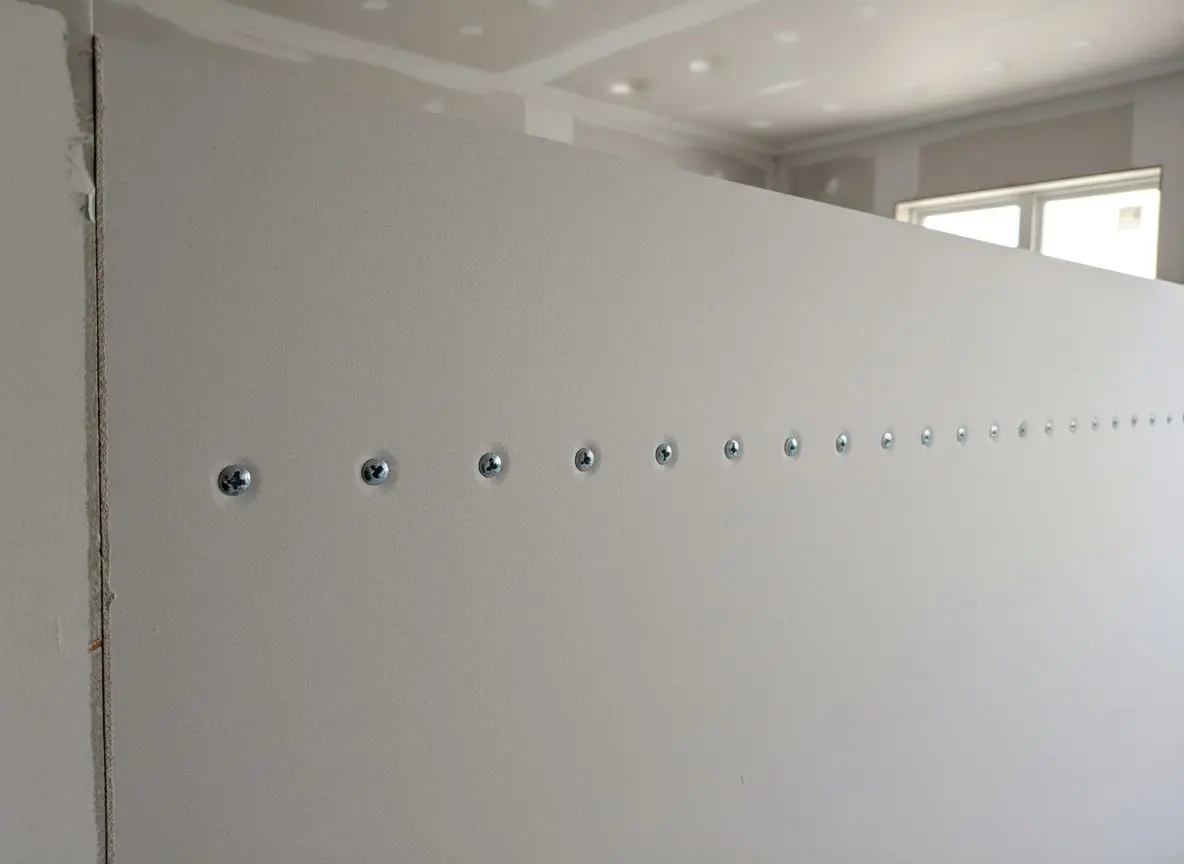
The usual jobs are finishing a basement, hanging an addition or a garage conversion, closing walls back up after electrical and plumbing work, and stripping a room to the studs and starting again. Sheets go up horizontally with the ends staggered so no two rows break on the same stud, and screws are set to depth with a dimpler rather than driven through the paper face, which is what stops the row of pops that turns up on a new wall in its second winter.
A homeowner turning a damp block basement in Colonial Park into a family room, and a builder on an addition in Mechanicsburg who wants it hung and taped between the electrician and the painter.
Ask for a free measure at (717) 555-0164 and it comes back priced room by room. You will stop steering visitors past the door you keep shut!
What the hanging covers before the painter arrives
Everything from the first sheet to a primed wall, on one quote.
- Framing checked and furred before any board goes up
- Half-inch board on walls, five-eighths overhead
- Basement and garage conversions
- Hanging additions and new construction rooms
- Closing walls after wiring and plumbing
- Taping, three coats and sanding to Level 4
- Scrap, packaging and old material taken away
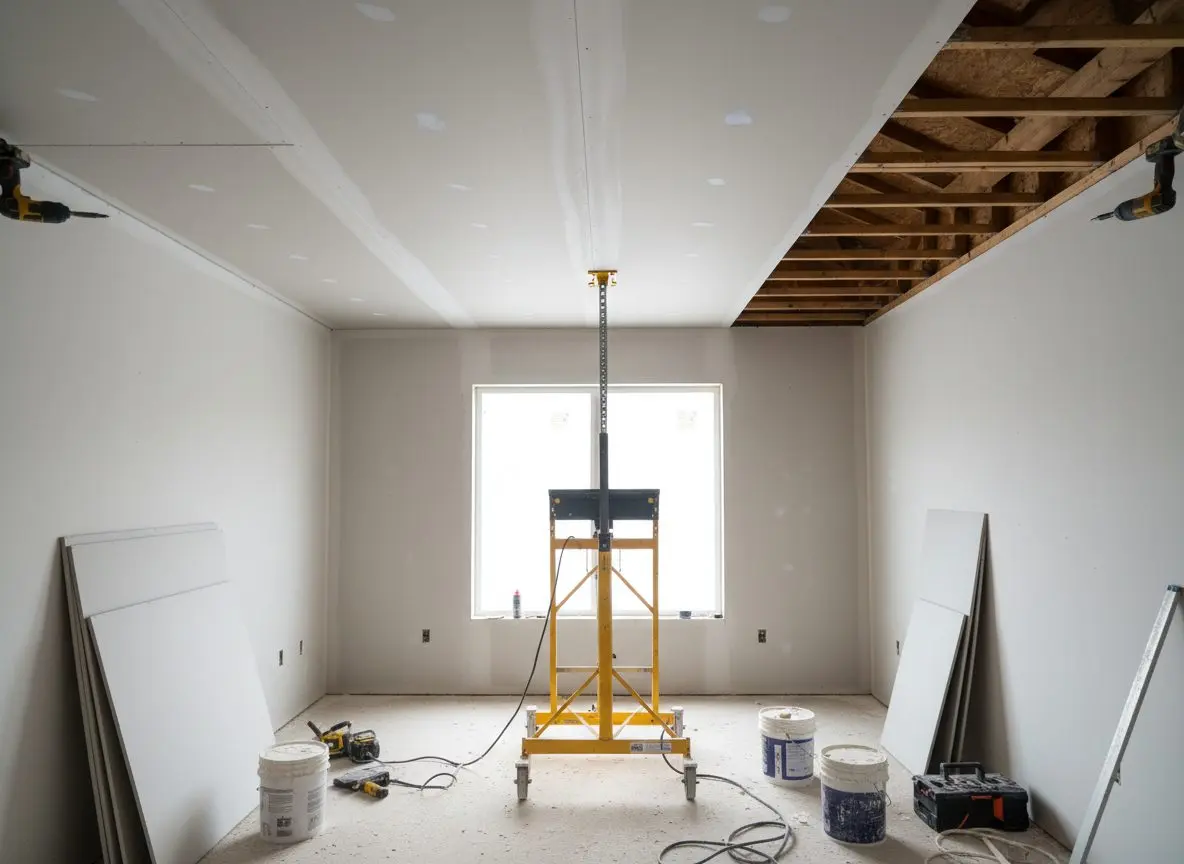
Board over the old wall, or strip it back to the studs
In plenty of older rooms the plaster can stay where it is and take a sheet straight over it.
Overhanging works when the plaster is still keyed to the lath, the wall is reasonably true, and you can afford to lose half an inch off the room. We fur the studs into one plane, glue and screw through into the framing, and extend the outlet boxes forward. It is faster, cheaper and far less mess.
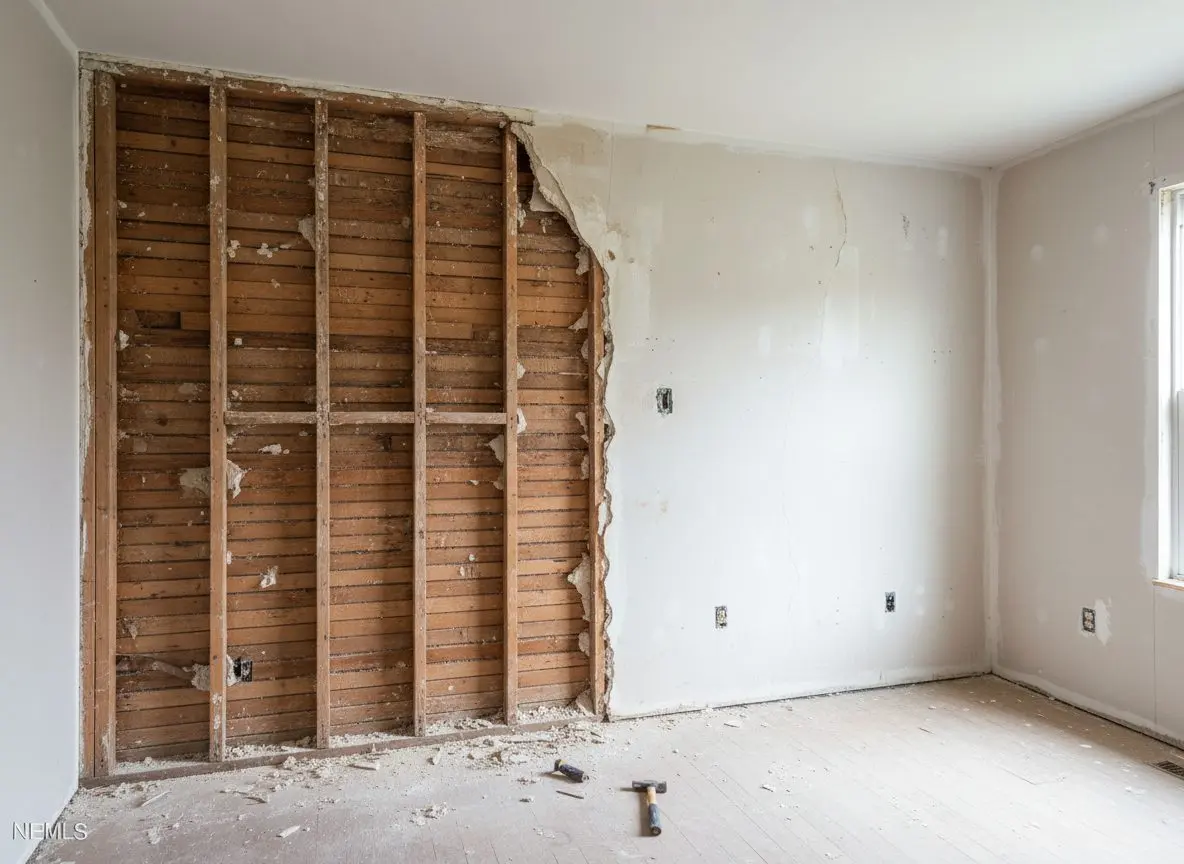
Strip it back when the plaster sounds hollow across a wide area, when it has been wet, or when the wiring or plumbing behind it is being touched anyway. Drywalling over a wall that has already let go traps the failure in the cavity, and the first sign is a sheet moving under a knock two winters later.
We say which one it is on the visit, and we say it even when the answer is the cheaper one. Sounding a wall takes ten minutes and settles the question, so nobody is guessing from a photograph. If half a room can be overhung and one wall has to come out, that is what the quote says.
Why the framing gets straightedged before any board
Sheets hung horizontally, ends staggered, screws set to depth, and every joint paper-taped before a coat goes near it.
New board goes up horizontally on walls, with the ends staggered so no two rows break on the same stud and the factory edges falling together wherever possible.
Screws are set with a dimpler to just below the paper face and spaced at twelve inches in the field, sixteen at the edges, and any screw that broke the paper is backed out and reset beside it.
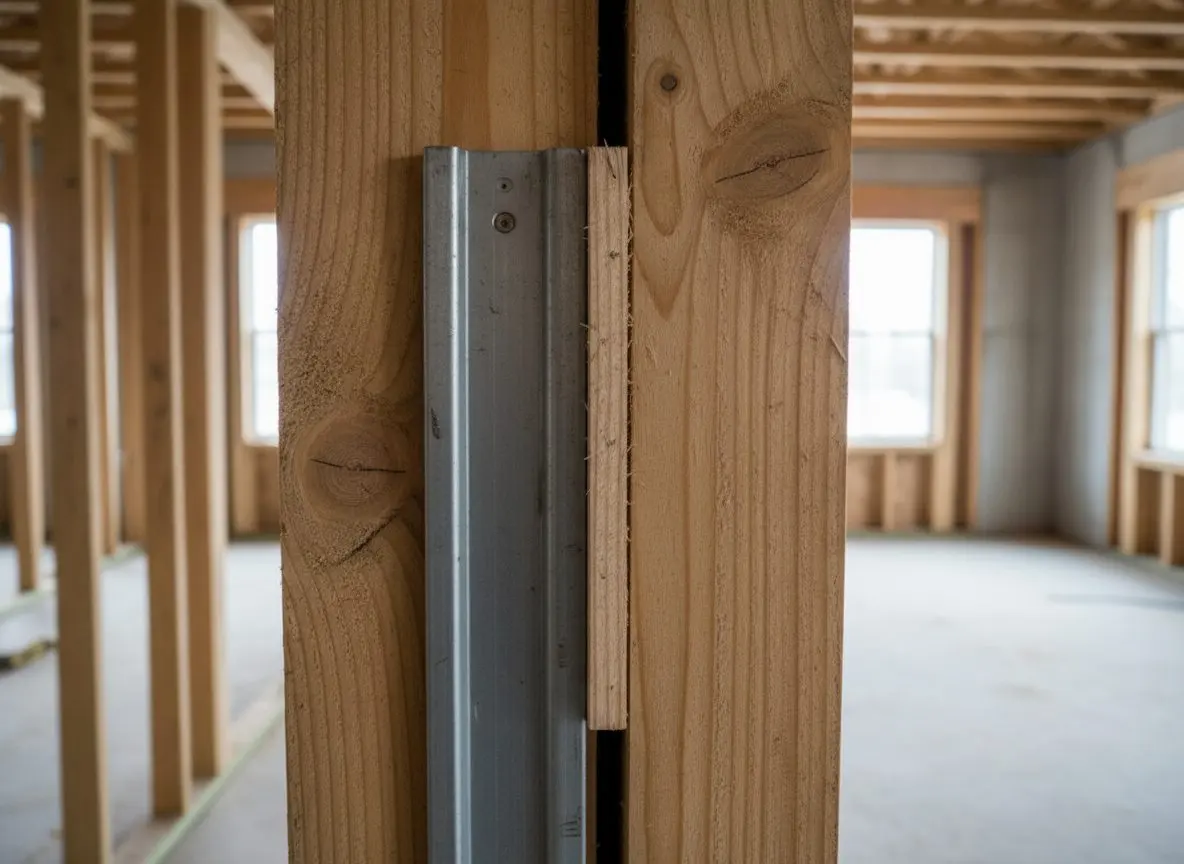
Framing is checked with a straightedge and furred before hanging, because a bowed stud shows as a shadow down a finished wall and no amount of compound fixes it. Joints are paper-taped, run in three coats of setting compound, and finished to ASTM C840 Level 4 as standard.
- Sheets hung horizontally with staggered ends
- Screws set to depth, never through the paper
- Twelve-inch screw spacing in the field
- Framing straightedged and furred first
- Factory edges paired wherever the run allows
- ASTM C840 Level 4 as the standard finish
Call and somebody will come and look at the wall, say which of these your job actually needs, and put the answer in writing.
(717) 555-0164The factors that set your installation price
Two rooms of the same square footage rarely price the same, because most of the cost is in what has to happen before the first sheet goes up and how flat you want the last one.
- Whether anything comes out first
- Hanging an open frame is the cheap version. Stripping plaster and lath, bagging it, carrying it out and tipping it can be a day and a half on a single rowhouse room before any new material arrives.
- Ceiling area against wall area
- Ceilings are slower than walls at every stage. The board is heavier, it wants a lift or a second pair of hands, and every coat is applied and sanded looking upward, Call it half again the labor per foot.
- Finish level
- Level 4 is priced as standard. Level 5 adds a skim over the entire board face plus another sand and another prime, which on a large open room is a further day and is the single biggest choice you make.
- Framing condition
- Old framing is rarely on modern centers and rarely straight. Furring a wall into plane before hanging is an hour a wall done properly, and skipping it is what puts a visible shadow down a finished corner.
- Openings and detail
- A plain rectangular room is quick. Every window return, arch, curved head, soffit and bulkhead adds cut board, more bead and more corners to coat, and corners are always slower than flat runs.
- Rated and specialist board
- Type X, mold-resistant and acoustic board all cost more per sheet than standard, and a rated assembly also has to be detailed at the joints and penetrations to be worth anything at all.
Which of these your job actually carries is settled by looking at it, and the quote names the ones we found. Get a free quote
Six steps between your call and a finished room
Three to five days on site for a typical room, and the loud, dusty half of it is finished in the first two.
Call and we will book the look, usually inside the same week, so you know what the job involves before you commit to it.
Get a free quoteInsulation, access panels and a bottom edge off the slab
New board is the cheapest part of a room and the one that decides how the rest of it looks.
There is no figure worth quoting on this. Remodeling Magazine's Cost vs. Value report has priced basement conversions and additions for the Middle Atlantic region for years, and drywall has never appeared in it as a line of its own, because it is always inside the larger job.
Anybody offering you a return percentage on drywalling a room has made the number up. What does carry forward is the decisions inside the job.
Insulation put into an open stud bay, a ceiling in five-eighths rather than half-inch, access panels framed in where the valves are, and a bottom course held clear of a basement slab all cost very little now and are expensive to add once the wall is closed.
Old centers, wet basements and a January install
Old rowhouse framing is not on modern centers, basements here flood from below rather than leak from above, and a January install has to be kept warm enough for compound to set.
- Studs are rarely where a sheet expects them
- Pre-1940 framing in the Midtown and Allison Hill rowhouses runs on irregular centers, often true timber and often bowed. A four-foot sheet does not land on a stud at its edge, so blocking goes in and the wall is furred into plane before hanging.
- Basements are hung for water, not damp
- A finished basement anywhere near the river has to assume it will get wet once. Bottom track is held an inch off the slab, the first board is cut short and held clear, and mold-resistant board runs the whole lower course, not just the bathroom.
- Winter installs need heat before compound
- Compound will not set properly below about fifty degrees, and an unheated addition in January is well under that. Either temporary heat goes in and stays on through the coats, or the taping waits, and we say which at the quote rather than on the day.
New board hung from Uptown out to Hummelstown
Six new board jobs finished in the last year, with the town each one was in and what had to be worked around.
-
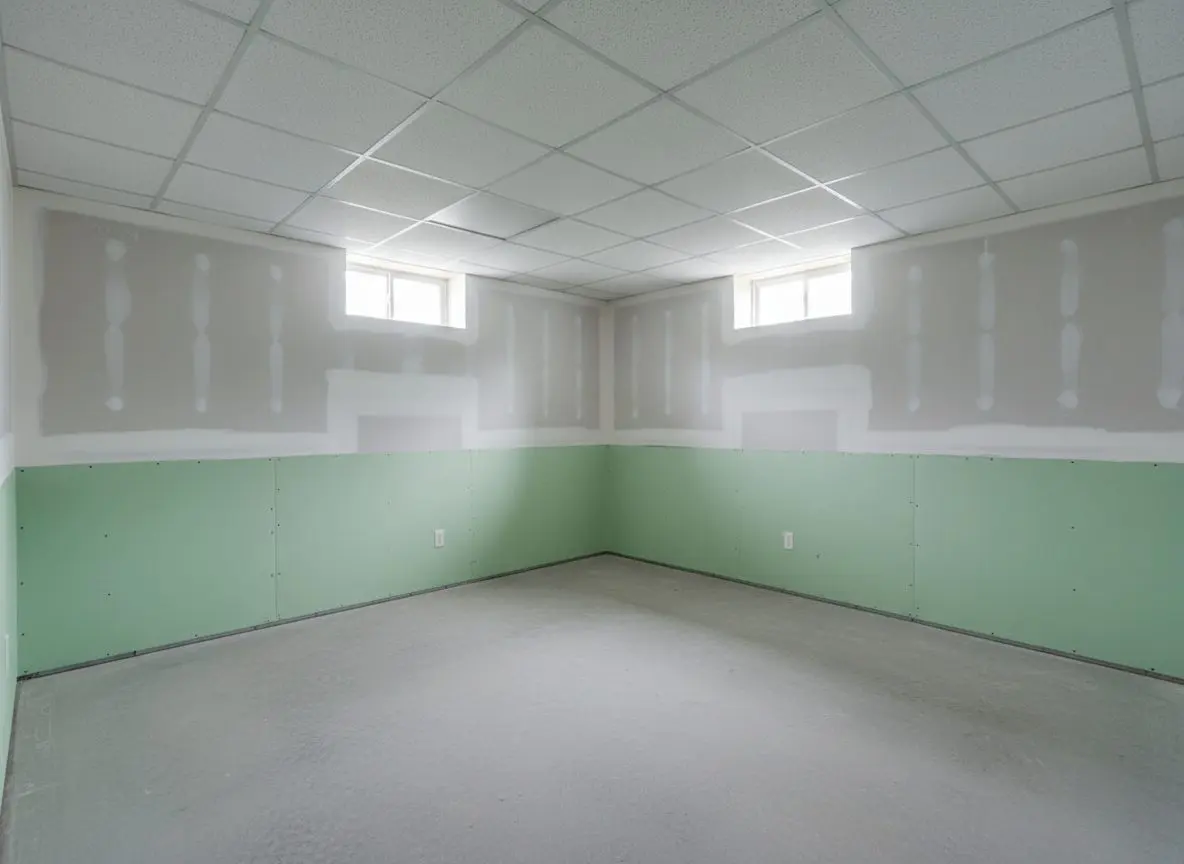
Block basement built out
Colonial Park
Furred off the block, insulated, and hung with mold-resistant sheets on the bottom course. Bottom track held an inch clear of the slab.
-
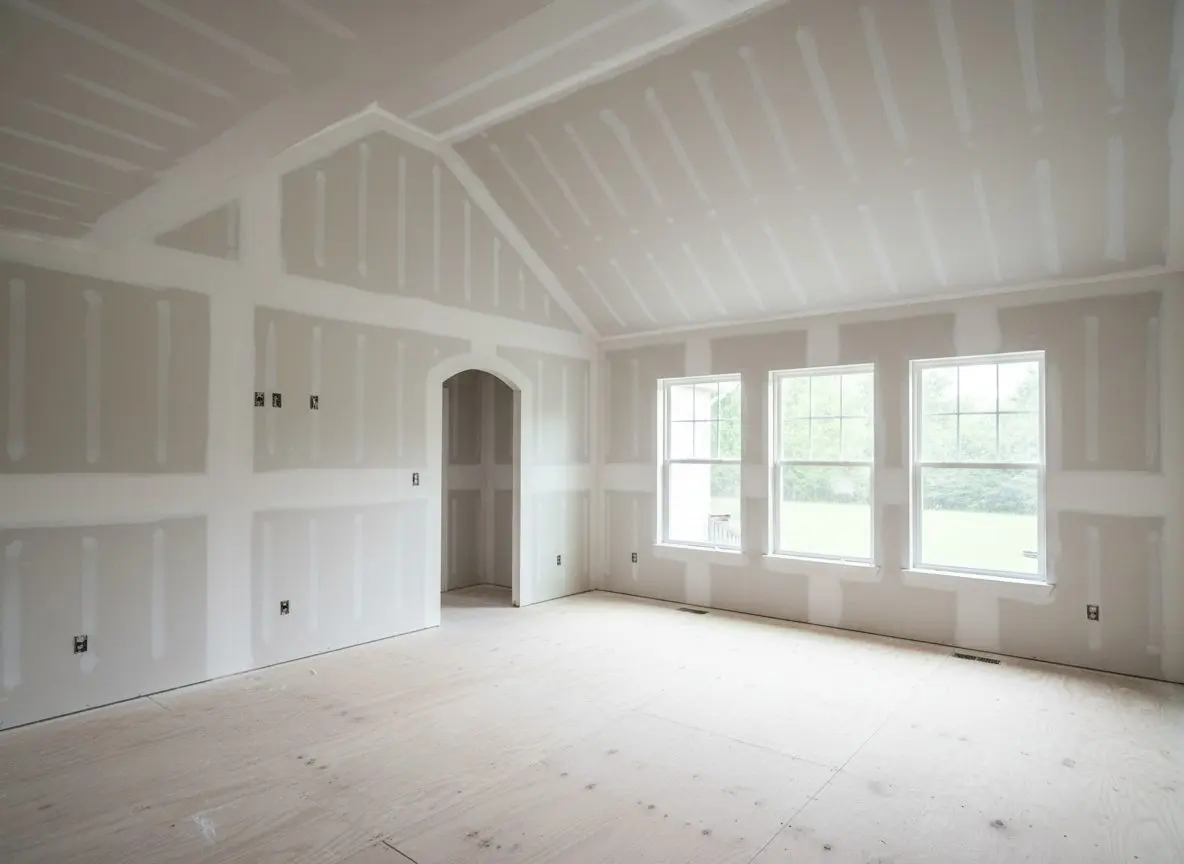
Two-story addition hung
Mechanicsburg
Six rooms and two ceilings, hung and taped between the electrician and the painter, finished to Level 4 with Level 5 in the stair hall.
-
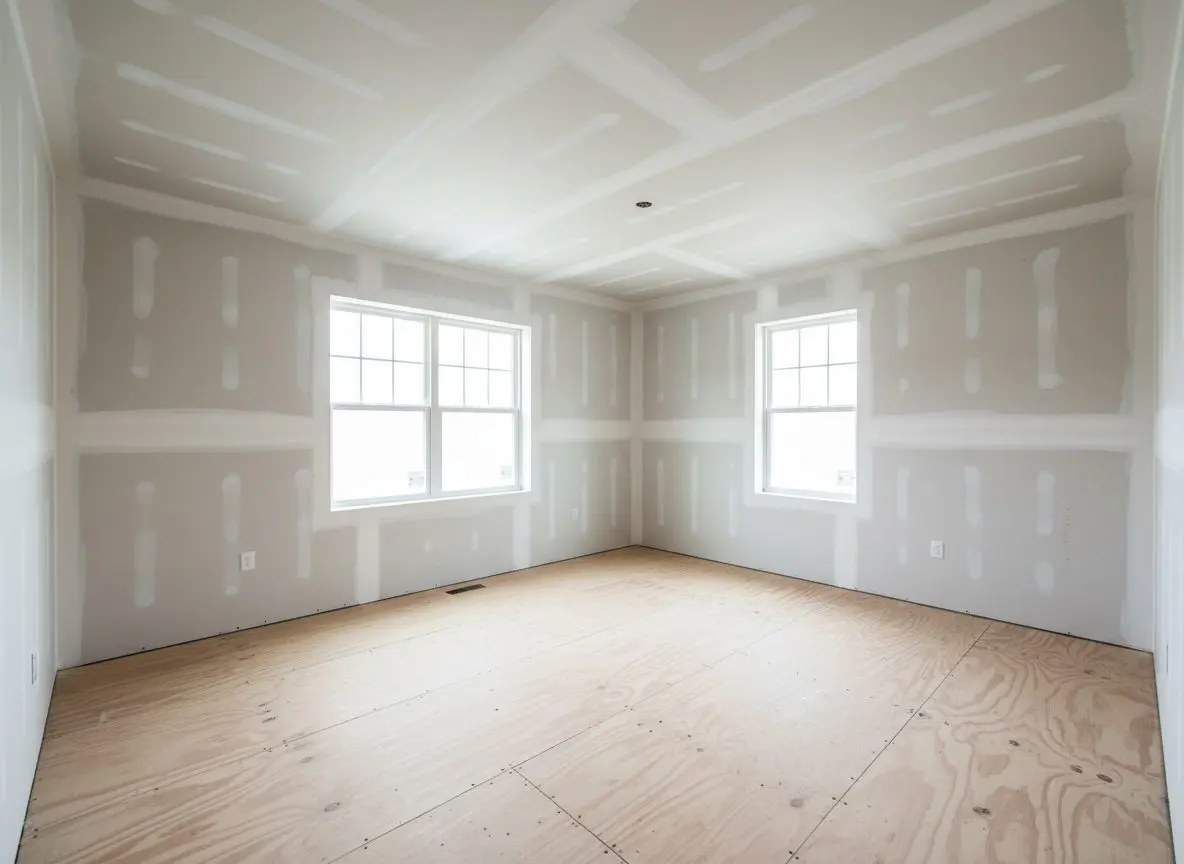
Garage converted to a bedroom
Enola
Type X to the ceiling under the room above, insulation into every bay, and the old header furred out to bring the new wall into plane.
-
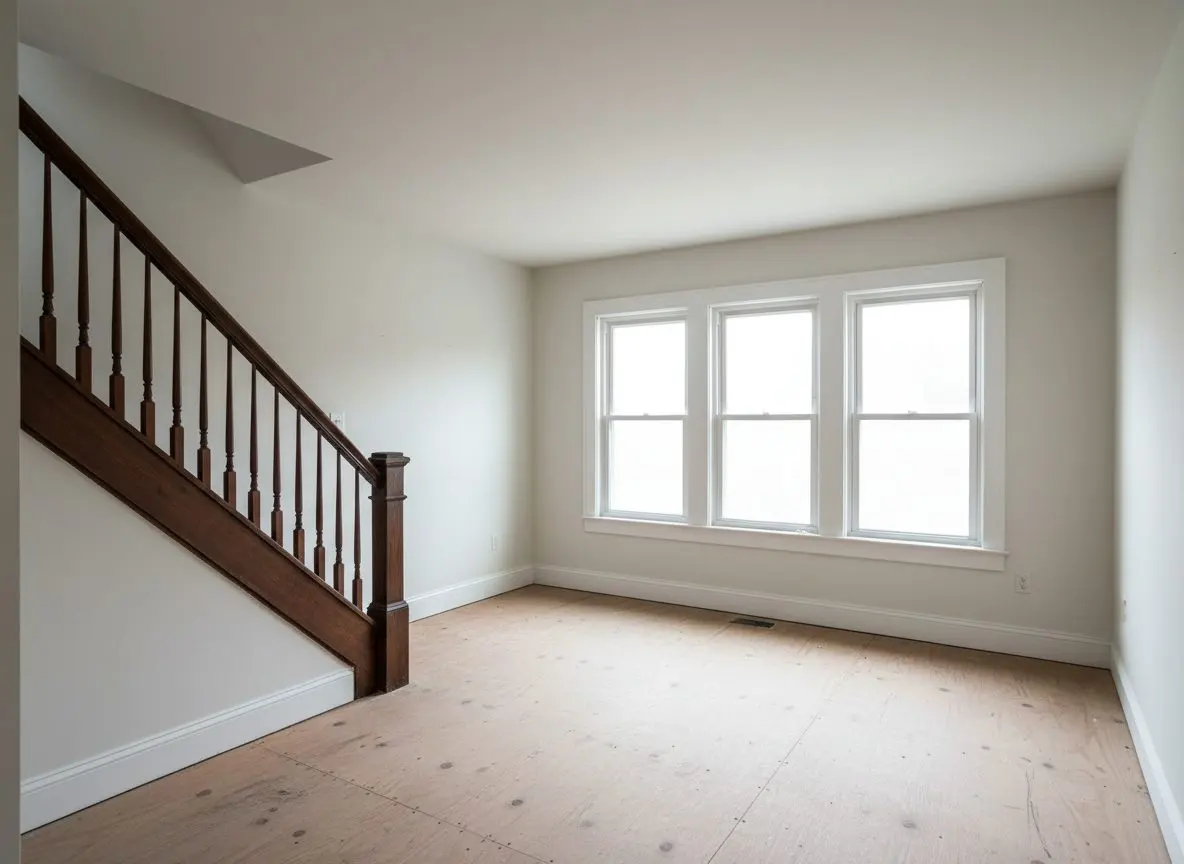
Rowhouse gutted and rehung
Uptown
Plaster and lath out of three floors, framing blocked and furred, then hung throughout. Original stair trim protected and reused.
-
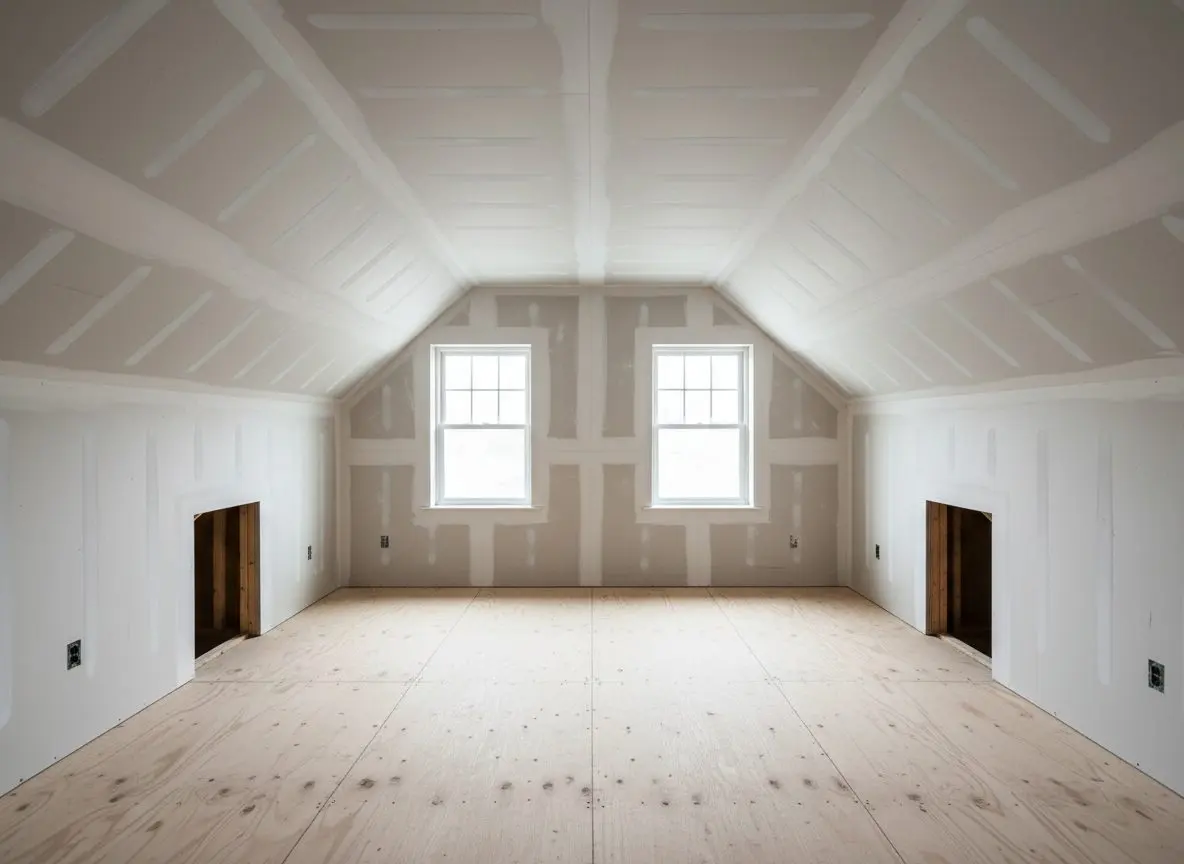
Attic room hung to the rafters
Bellevue Park
Sloping ceilings and two dormers, all cut on site. Collar ties boxed in and the knee walls framed to give storage behind them.
-
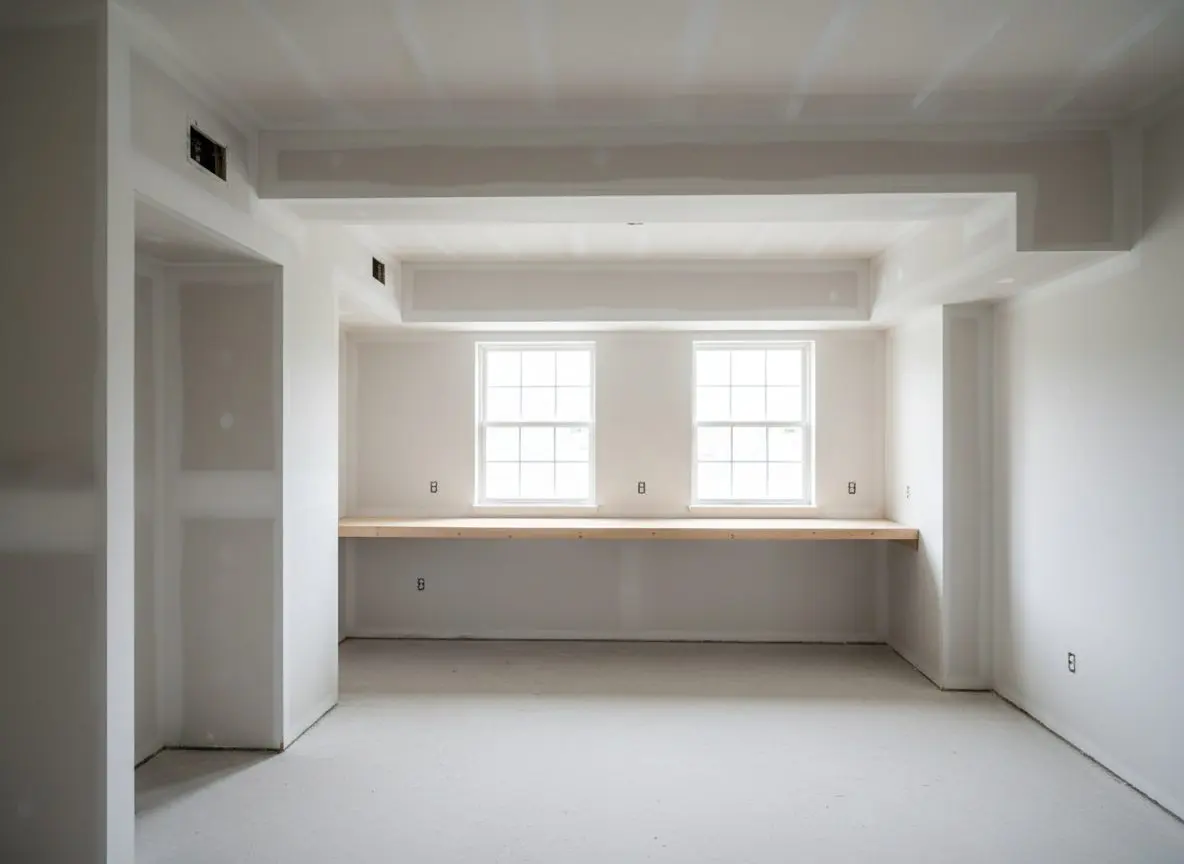
Soffits and bulkheads in a kitchen
Hummelstown
Ductwork and a beam boxed out, with access panels framed in over two shut-off valves before anything was taped.
What people said once the room was closed up
-
Rated 5 out of 5
Tenant moved out and left four holes and a kicked-in closet door. Patched, matched and primed in a day and a half. I had the keys back on the Thursday.
Warren S. Enola Drywall Repair -
Rated 5 out of 5
A plumber cut a two foot strip out of our kitchen ceiling to reach a leaking supply line and left it open. They hung new board and matched the texture, and I cannot find the line from the table now.
Alanna F. Hummelstown Ceilings -
Rated 5 out of 5
Water came up through the basement floor after the August storm and I thought it was a mop and a fan job. They cut the board back higher than I wanted and ran the fans four extra days. No smell since.
Terri D. Linglestown Water Damage Repair
Call and ask for a couple of addresses near you where we finished a job this year.
Get a free quoteFAQs
Frequently asked questions
Questions people ask about a new board job
Do I need a permit to finish my basement?
For a habitable room, usually yes, and it is the homeowner or the general contractor who pulls it rather than us. Framing, egress and any rated assembly get inspected before the board covers them, so the schedule has to leave room for that visit and we will plan around it.
How long does hanging one room take?
A plain twelve by fourteen room is a day to board and two to three days to tape, coat and sand, because each coat has to dry before the next one. Add a day for a ceiling and another if you want Level 5, so most single rooms run four to five days end to end.
Can you board over plaster instead of taking it out?
Often yes, and it saves both mess and money. The plaster has to still be keyed to the lath and the wall has to be true enough to fur into plane. We sound it on the visit, and if only one wall has let go we will say so rather than pricing the whole room the expensive way.
Do you frame as well, or only hang the board?
We frame partition walls, soffits and bulkheads, and we fur and block existing framing so it takes board properly. Structural work, load-bearing changes and anything needing an engineer is not ours, and we will tell you on the visit rather than after the quote.
Should insulation go in while the wall is open?
If you are ever going to want it, now is the only cheap time. A stud bay costs nothing to fill while it is open and costs a demolition job afterwards. Mineral wool between a bedroom and a stairwell is the one people regret skipping most.
Will the new wall match the height of the old one?
If it is overhung it moves forward by the thickness of the board plus the furring, usually about three quarters of an inch, and that has to be dealt with at the door casings, window returns and baseboards. We plan those details at the measure so nothing is discovered halfway through.
What happens with the outlets and switches?
Boxes get extended forward to meet the new face, which is a code requirement rather than a nicety, and we cut the openings as the board goes up. Moving a box or adding a circuit is an electrician's job and we will hold the wall open until they have been.
Can you work around a floor that is already down?
Yes, and it is common on an addition where the flooring went in early. The floor gets covered in board and taped at the joins, cutting happens outside, and the sanding is done with a vacuum sander. It is slower than an empty shell, and the quote will say so.
Do you hang board vertically or horizontally?
Horizontally on walls, which is standard for residential work. It puts the butt joints at chest height where they are easier to feather, it halves the length of joint to be taped, and it ties more studs together across the sheet. Commercial rated assemblies sometimes call for vertical, and then we hang vertical.
How soon can I paint a newly hung room?
Once the final coat is properly dry and sanded, which in practice is the day after we finish. We prime before handing over, partly because primer is what shows up anything that needs another pass, and a decorator coming to a primed wall can start immediately.
Can you do it in stages while we live here?
Yes, and most whole-house jobs run that way. We do a floor or a pair of rooms at a time, seal them off, and leave you a working kitchen and a bathroom throughout. It adds days overall because there is more setting up and clearing down, and the quote reflects that.
What do you do with all the old lath and plaster?
It leaves with us. A single rowhouse room can fill a truck twice, so removal, loading and tipping are in the quote from the start rather than added at the end. Nothing gets stacked in the yard or the alley waiting for a second trip.
Harrisburg Drywall Pros
Flood and burst-pipe damage moves ahead of the ordinary line, no matter what else is booked.
Harrisburg Drywall Pros hangs, tapes, finishes and repairs board across Harrisburg and the river towns nearby, in rowhouses with plaster on lath as often as new construction. Three crews finish around a hundred and ninety jobs a year, and flood or burst-pipe damage is fitted in ahead of the ordinary line. Trading here since 2012.
Why the river towns call Harrisburg Drywall Pros first
- Fourteen years working the river towns, trading since 2012
- We sound the plaster and check the lath before putting a number on anything
- Flood and burst-pipe damage moves ahead of the ordinary line
- Freeze-thaw cracks are taped and bedded, not just filled over
- Nothing is added to the quote later without you agreeing to it first
If the river has left a stain on a lower wall, an old ceiling needs opening up, or a room needs drywall from scratch, call (717) 555-0164 and somebody will come and look at it. The written quote follows the visit, broken down room by room, and nothing gets added to it later without you agreeing first.
Give us a call
office@harrisburgdrywallpros.com
Send us a message
922 N 3rd St, Harrisburg, PA, 17102
Where to find us